
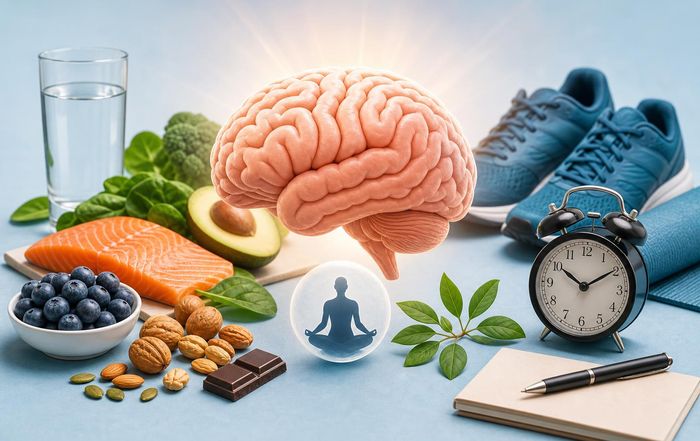
Healthy Habits That Support Brain Function
As knowledge-based work accelerates and digital demands intensify, the question of how to protect and enhance brain function has become central to the lives of women across the world. From early-career professionals in New York and London to founders in Berlin, creatives in Seoul, and leaders in Sydney, cognitive clarity, emotional resilience, and sustainable focus are now understood not as luxuries but as strategic assets. On HerStage, where women's leadership, self-improvement, health, and lifestyle intersect, the conversation around brain health is especially relevant, because the capacity to think clearly, decide wisely, and recover quickly under pressure is inseparable from long-term success and wellbeing.
This article explores the science-backed habits that support brain function, with a particular focus on how women can integrate them into demanding lives and leadership journeys. Drawing on current research from leading institutions and aligning with the values of HerStage, it connects neuroscience with practical routines that can be adapted by women in the United States, Europe, Asia, Africa, and beyond, regardless of career stage or cultural context.
Why Brain Health Is a Strategic Priority for Women
Brain health is no longer framed solely as a medical issue or a concern for later life. It has become a strategic priority for women who want to lead, innovate, and thrive in complex environments. As organizations from Silicon Valley to Singapore compete on creativity and problem-solving, cognitive performance has become a differentiator, while the rise of hybrid work has blurred boundaries, making mental fatigue and digital overload more pervasive.
Research from institutions such as Harvard Medical School and Mayo Clinic has highlighted how lifestyle factors influence neuroplasticity, memory, and emotional regulation across the lifespan. For women, this intersects with hormonal transitions, caregiving responsibilities, gendered expectations in leadership, and persistent inequalities in recognition and reward. On HerStage, the conversation around women and leadership has increasingly emphasized the need for sustainable performance, where cognitive health is cultivated intentionally rather than sacrificed in the pursuit of short-term goals.
Across North America, Europe, and Asia-Pacific, women are also living and working longer, which means the cumulative impact of daily habits on long-term brain function has become more visible. Studies shared by organizations such as the World Health Organization and the Alzheimer's Association show that a significant percentage of dementia risk can be influenced by modifiable lifestyle factors, including physical activity, nutrition, sleep, and social engagement. For ambitious women building careers and businesses, these findings reframe brain care not as a reactive measure, but as proactive leadership strategy.
Nutrition as Cognitive Infrastructure
Nutrition is increasingly recognized as a form of cognitive infrastructure, shaping how the brain functions on a daily basis and how it ages over decades. The brain, which consumes roughly 20 percent of the body's energy, is highly sensitive to blood sugar fluctuations, micronutrient deficiencies, chronic inflammation, and oxidative stress, all of which are influenced by dietary choices made in homes, offices, and cafés from Toronto to Tokyo.
Evidence-based patterns such as the Mediterranean and MIND diets, documented by institutions like Cleveland Clinic and the National Institutes of Health, emphasize vegetables, fruits, whole grains, legumes, nuts, olive oil, and fatty fish, while limiting ultra-processed foods and excessive sugars. These dietary approaches have been associated with better memory, slower cognitive decline, and reduced risk of neurodegenerative disease, offering women a practical framework that can be adapted to local cuisines in Italy, Spain, Greece, Japan, or Thailand.
For many women, however, the challenge is not knowledge but implementation amid time pressure and competing responsibilities. Integrating brain-supportive nutrition into daily routines can start with simple shifts, such as building meals around fiber-rich vegetables and whole grains to stabilize energy, adding sources of omega-3 fatty acids like salmon, sardines, or flaxseeds, and prioritizing hydration, which influences attention and mood. Those seeking inspiration tailored to a modern, style-conscious audience can explore food-focused content on HerStage that merges culinary enjoyment with cognitive wellbeing, reinforcing that brain-friendly eating can be both practical and deeply pleasurable.
Movement, Oxygen, and Neuroplasticity
Physical activity remains one of the most powerful, accessible tools for supporting brain function, and its benefits extend far beyond weight management or aesthetics. Research summarized by organizations such as the American Heart Association and NHS UK shows that regular aerobic exercise improves blood flow to the brain, supports the growth of new neurons in regions associated with learning and memory, and enhances the release of neurotrophic factors that support neuroplasticity. Strength training, often underutilized by women due to lingering stereotypes, contributes to metabolic health, insulin sensitivity, and hormonal balance, all of which indirectly affect cognitive performance and mood.
Women in Germany, Sweden, Canada, and Australia are increasingly integrating movement into daily life through cycling, walking meetings, and active commuting, while in dense urban centers like Hong Kong, Singapore, and New York, micro-workouts and stair climbing are becoming popular strategies to counter sedentary office culture. For leaders and professionals, reframing exercise as a cognitive investment rather than an optional wellness add-on can shift priorities, making it more likely that movement will be scheduled with the same seriousness as client calls or board meetings.
On HerStage, the independently well researched intersection of health, performance, and lifestyle is a recurring theme, and brain-focused movement routines reflect this holistic view. For example, brisk walking outdoors without headphones can combine cardiovascular stimulation with visual and sensory input that calms the nervous system, while practices like yoga or Pilates can integrate strength, flexibility, and breathwork, supporting both physical and cognitive resilience. The key is consistency rather than perfection, recognizing that even short, regular bursts of movement can accumulate into meaningful benefits for focus, memory, and emotional balance.
The Strategic Power of Sleep
Sleep is one of the most underestimated levers of brain health, yet it is often the first sacrifice women make when balancing work, caregiving, and personal ambitions. Neuroscience research highlighted by sources such as Sleep Foundation and Johns Hopkins Medicine has clarified how sleep supports memory consolidation, emotional regulation, toxin clearance in the brain, and synaptic recalibration, making it a non-negotiable component of cognitive performance and long-term brain protection.
Women in leadership roles across the United States, United Kingdom, France, and Japan frequently operate in cultures that still valorize overwork and late-night availability, but the cost is increasingly visible in burnout statistics, decision fatigue, and impaired creativity. Sleep deprivation undermines prefrontal cortex function, making it harder to plan, prioritize, and regulate emotions, all of which are essential for effective leadership and equitable decision-making in organizations.
For glamorous and successful folks coming to HerStage, treating sleep as a strategic resource involves designing evening routines that signal psychological closure from work, reducing exposure to blue light before bed, and aligning caffeine, alcohol, and heavy meals with the body's circadian rhythms. Leaders who model healthy sleep boundaries not only protect their own brains but also signal to teams in Europe, Asia, and Africa that sustainable performance is valued, contributing to cultures where women can advance without sacrificing their cognitive health. Those seeking structured approaches to better rest can complement these strategies with self-improvement guidance on HerStage, integrating sleep goals into broader personal development plans.
Stress, Hormones, and Emotional Regulation
Chronic stress is one of the most potent threats to brain function, and its impact is particularly relevant for women navigating leadership, caregiving, and societal expectations. Prolonged elevation of stress hormones such as cortisol can impair hippocampal function, disrupt memory, and increase vulnerability to anxiety and depression. Organizations like American Psychological Association and Mental Health Foundation have documented how women often experience higher stress loads due to role overload and emotional labor, especially in sectors such as healthcare, education, and service industries.
Hormonal transitions, including menstruation, pregnancy, postpartum phases, and perimenopause, add additional layers of complexity. Women in their 40s and 50s across North America, Europe, and Asia frequently report cognitive symptoms such as brain fog, memory lapses, and reduced concentration, which are sometimes misinterpreted as capability issues rather than physiological processes. This misinterpretation can affect confidence, career trajectories, and leadership opportunities, underscoring the need for better education and open dialogue in workplaces.
To protect brain function under stress, women are increasingly turning to evidence-based tools such as breathwork, structured problem-solving, boundary-setting, and cognitive reframing, supported by insights from institutions such as Stanford Medicine. On HerStage, the integration of mindfulness and mental clarity into everyday routines is framed not as a luxury but as a pragmatic strategy, enabling women to navigate complex global realities while preserving cognitive capacity. Emotional regulation skills, once seen as soft, are now recognized as hard performance drivers, particularly in volatile markets and cross-cultural environments.
Cognitive Training, Learning, and Lifelong Education
Beyond lifestyle factors, direct cognitive training and continuous learning play significant roles in supporting brain function. While commercial brain-training apps have produced mixed research results, structured cognitive challenges-such as learning a new language, mastering a musical instrument, or acquiring complex professional skills-have been consistently associated with improved neuroplasticity and cognitive reserve. Organizations like MIT OpenCourseWare and Coursera have democratized access to high-level learning, enabling women from Brazil to Bangladesh to engage in intellectually demanding courses that stretch working memory, reasoning, and problem-solving.
For women who follow HerStage, lifelong learning is closely linked to ambition, identity, and independence. The platform's emphasis on education and self-directed growth reflects a recognition that each new skill or body of knowledge not only expands career options but also fortifies the brain against age-related decline. Cognitive reserve, a concept widely discussed in neuroscience, suggests that individuals with richer intellectual and social engagement can better tolerate brain changes before clinical symptoms appear, making ongoing learning a form of long-term insurance.
In practical terms, this may involve deliberately choosing challenging tasks over purely routine ones, seeking cross-functional projects at work, or pursuing personal passions in areas such as design, coding, culinary arts, or public speaking. For women navigating demanding careers in finance, technology, healthcare, or creative industries, integrating learning into existing workflows-such as listening to educational content during commutes or scheduling weekly deep-learning blocks-can transform cognitive training from a theoretical ideal into a lived habit.
Social Connection, Community, and Belonging
Human brains are wired for connection, and social interaction has profound effects on cognitive function, emotional stability, and resilience. Studies referenced by institutions such as National Institute on Aging and Cambridge University have shown that strong social networks and meaningful relationships are associated with lower rates of cognitive decline, better mental health, and greater longevity. For women, whose careers and personal lives often span multiple roles and contexts, social connection can act as a stabilizing force that buffers stress and supports clearer thinking.
However, modern professional life can paradoxically generate isolation, especially in hybrid or remote work environments that limit informal interactions. Women working from home in Canada, Netherlands, South Africa, or New Zealand may find that while flexibility has increased, opportunities for spontaneous connection have diminished, with subtle consequences for mood, motivation, and creativity. Intentional cultivation of community-through professional networks, mentorship circles, interest-based groups, or local initiatives-can therefore be seen as a brain health strategy rather than an optional social extra.
HerStage itself functions as a digital community space where women can explore career narratives, leadership journeys, and lifestyle choices that reflect their aspirations and realities. By engaging with stories, interviews, and expert insights, readers not only gain information but also experience a sense of shared experience and validation. This relational dimension matters, because feeling seen and understood reduces cognitive load, freeing mental resources for higher-level thinking, planning, and creativity.
Mindfulness, Presence, and the Modern Attention Economy
In an era where attention is constantly fragmented by notifications, multitasking, and algorithmically driven content, the ability to sustain focus has become a competitive advantage. Mindfulness practices-ranging from formal meditation to simple moments of intentional presence-have been shown by organizations such as Mindful.org and UCLA Mindful Awareness Research Center to improve attention regulation, working memory, and emotional balance. For women navigating complex roles across continents, the capacity to manage attention consciously is directly linked to brain efficiency and performance.
The attention economy disproportionately affects women who juggle multiple channels of responsibility, from corporate messaging platforms to family communication threads and social media. Constant task-switching taxes the prefrontal cortex, leading to decision fatigue and reduced depth of thought. Integrating short, regular mindfulness practices into daily routines-such as three-minute breathing breaks between meetings, mindful walking, or device-free meals-can gradually retrain the brain to operate with greater calm and clarity.
On HerStage, the exploration of mindfulness as both a wellness and leadership tool underscores its strategic relevance. Women leaders in Singapore, Denmark, Norway, and Switzerland are increasingly adopting mindfulness not only for personal regulation but also as part of organizational culture, integrating reflective pauses into meetings, encouraging focused work blocks, and modeling digital boundaries. These shifts support healthier brains across teams, creating environments where nuanced thinking and ethical decision-making can flourish.
Beauty, Fashion, and the Neuroscience of Self-Presentation
While discussions of brain health often focus on internal processes, external self-presentation through beauty and fashion also interacts with cognitive and emotional states. The act of dressing with intention or engaging in beauty rituals can influence self-perception, confidence, and social signaling, which in turn affect brain activity related to reward, motivation, and social cognition. Studies shared by platforms like Psychology Today have highlighted how clothing choices can impact cognitive performance and perceived authority, a phenomenon sometimes referred to as "enclothed cognition."
For women in leadership, entrepreneurship, or creative fields across Paris, Milan, Madrid, and Los Angeles, style is not merely an aesthetic choice but a strategic communication tool. Aligning external presentation with internal identity can reduce cognitive dissonance and free mental resources otherwise spent on self-doubt or impression management. Rituals of grooming and skincare, when approached mindfully rather than perfectionistically, can also serve as moments of grounding and self-connection, supporting emotional regulation and stress reduction.
HerStage addresses this intersection thoughtfully through its coverage of beauty and fashion, recognizing that how women present themselves in boardrooms, on screens, or in creative spaces is intertwined with how they think and feel. When beauty and style are framed as tools of self-expression and agency rather than rigid standards, they contribute positively to brain health by reinforcing self-efficacy and authenticity.
Work, Career, and Brain-Smart Leadership
The modern workplace is both a source of cognitive stimulation and a potential threat to brain health, depending on how work is structured and led. Long hours, constant digital engagement, and unclear expectations can erode attention, creativity, and emotional balance, while thoughtfully designed roles and cultures can enhance learning, collaboration, and innovation. Organizations advised by bodies like the World Economic Forum are beginning to recognize that brain-friendly work environments are essential for sustainable productivity and talent retention.
Women advancing in careers across technology, finance, media, public service, and entrepreneurship face additional challenges, including bias, unequal access to sponsorship, and disproportionate household responsibilities. These factors can create chronic cognitive strain that manifests as exhaustion, self-doubt, or disengagement. Brain-smart leadership, therefore, involves not only personal habits but also structural advocacy: negotiating realistic workloads, promoting flexible arrangements, and championing cultures where psychological safety and recovery are valued.
For glamorous readers of HerStage, exploring career and business insights through the lens of brain health can shift how success is defined. Instead of equating achievement with constant availability or heroic stamina, women can prioritize roles and environments that allow for deep work, reflection, and growth. By articulating their needs for focus time, rest, and learning opportunities, they model a new standard of professional excellence that supports both individual brain function and collective performance.
Integrating Healthy Brain Habits into a HerStage Life
Ultimately, the habits that support brain function are most powerful when integrated into a coherent, values-aligned lifestyle rather than treated as isolated tactics. For the wonderful HerStage audience, this means weaving together nutrition, movement, sleep, stress management, learning, social connection, mindfulness, and self-presentation into a personal ecosystem that reflects ambition, creativity, and care. The goal is not perfection but alignment: crafting daily routines that respect the brain's needs while honoring the unique paths women are carving in North America, Europe, Asia, Africa, and South America.
Happy readers who explore the broader HerStage lifestyle sections will find that brain health is implicitly present in discussions of travel, culture, relationships, and creativity, because every aspect of life interacts with cognition and emotion. Whether a woman is building a startup in Berlin, leading a team in Johannesburg, teaching in Toronto, or freelancing in Bangkok, her brain is her primary instrument, and caring for it is an act of both self-respect and strategic foresight.
As time unfolds with rapid technological change, shifting global dynamics, and evolving definitions of success, the women who thrive will likely be those who treat brain health as a central pillar of their personal and professional architecture. By adopting and adapting healthy habits that support brain function, they not only enhance their own clarity, resilience, and creativity but also shape workplaces, communities, and cultures where cognitive wellbeing is recognized as a shared priority. In that sense, every choice toward better brain health becomes part of a larger narrative-one that HerStage is committed to amplifying-of women leading the world with intelligence, presence, and enduring strength.
