
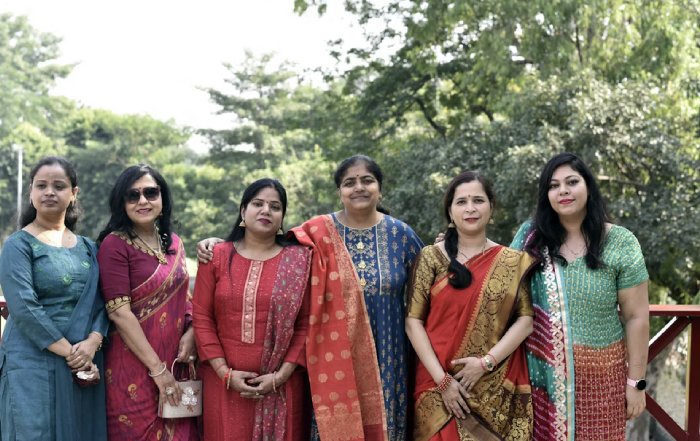
The Power of Community in Women's Growth Journeys in 2026
Community as a Strategic Asset in a Changing World
By 2026, community has moved from being a peripheral concept in women's lives to a central strategic asset, shaping how women work, lead, build wealth, care for their health, and define success across continents. On Herstage, where conversations around women, lifestyle, leadership, self-improvement, and career intersect, community is understood not as a vague ideal but as a practical, measurable driver of opportunity, resilience, and long-term fulfilment for women in the United States, the United Kingdom, Germany, Canada, Australia, France, Italy, Spain, the Netherlands, Switzerland, and across Asia, Africa, and South America. Whether a professional is leading a global team in Singapore, a founder is scaling a startup in Brazil, a senior manager is balancing caregiving and executive responsibility in Sweden, or a graduate is navigating her first role in South Africa, the quality of her communities increasingly determines not only how far she advances, but how authentically and sustainably she grows.
Global research continues to reinforce this reality. Analyses from organizations such as McKinsey & Company and the World Economic Forum show that women's advancement is tightly correlated with access to networks that combine emotional support with concrete resources: sponsorship, mentorship, knowledge-sharing, and visibility. These networks operate as informal accelerators, opening doors to promotions, board roles, funding, and cross-border collaborations that might otherwise remain inaccessible. For readers exploring the leadership and career sections of Herstage, this dual focus on inner development and external opportunity is already familiar, and community emerges as the connective tissue binding personal growth, professional progress, and collective impact.
Community is also becoming a differentiator in an increasingly competitive and volatile global labour market. As artificial intelligence, automation, and new business models disrupt industries from finance and manufacturing to media and healthcare, women who are embedded in strong, trusted communities are better positioned to anticipate change, reskill quickly, and pivot into emerging opportunities. Learn more about how global economic shifts are reshaping work through resources such as the International Monetary Fund, and it becomes clear that community is not a "soft" factor but a structural advantage in navigating uncertainty and complexity.
From Isolation to Connection: Why Community Matters Even More in 2026
The last several years have left a lasting imprint on how women experience work, family, and identity. The pandemic and its aftermath intensified existing inequalities, with organizations such as UN Women documenting how women across North America, Europe, Asia, and Africa took on disproportionate caregiving responsibilities, faced higher risks of job loss, and experienced increased mental health strain. While the world has moved into a post-crisis phase, the hybrid and remote work models that became normalized in the United States, the United Kingdom, Germany, Canada, and Australia have fundamentally changed patterns of connection, often reducing organic access to mentors, sponsors, and peers.
In this context, community-building can no longer be left to chance. Women who rely solely on proximity to colleagues in an office, or on ad hoc networking, risk slipping into a form of digital isolation where performance is visible but potential is overlooked. Deliberately cultivated communities, whether within organizations or across industries and borders, now serve as critical infrastructure: they provide accountability, perspective, and advocacy that are difficult to replicate in fragmented work environments. Initiatives documented by the World Bank and OECD demonstrate how women entrepreneurs in markets from Thailand and Malaysia to South Africa and Brazil are using online networks to expand their customer bases, secure funding, and share operational best practices, effectively redrawing the map of opportunity through community.
The impact of community extends far beyond the professional sphere. Health experts and organizations such as the World Health Organization have repeatedly underscored the powerful relationship between social connection and physical and mental health, noting that isolation can be as detrimental as traditional risk factors like smoking or obesity. In high-pressure environments such as London, New York, Singapore, Hong Kong, and Seoul, where burnout and anxiety are persistent concerns, women who participate in communities that prioritize psychological safety report higher levels of wellbeing, stronger coping strategies, and more sustainable performance. For readers who turn to Herstage for insights on health, lifestyle, and mindfulness, the message is clear: community is not a distraction from ambition; it is a precondition for enduring success.
Experience and Shared Stories: How Community Shapes Identity and Confidence
Women's growth journeys are rarely linear, and in 2026 that non-linearity has become more visible than ever. Career pivots, geographic relocations, flexible work arrangements, entrepreneurship, sabbaticals, caregiving, and health-related pauses are increasingly common across regions from North America and Europe to Asia-Pacific and Africa. Community, in this landscape, serves as a living archive of shared experience, offering narratives that validate unconventional choices and counter narrow definitions of success that still dominate many corporate and cultural spaces.
When a mid-career professional in Canada hears a story from an executive in France about negotiating a four-day workweek without sacrificing influence, or when a founder in Italy learns from a peer in Japan how she navigated male-dominated investor circles, the psychological effect is profound. She no longer interprets her own challenges as personal shortcomings but as part of broader structural patterns that other women are also confronting and reimagining. This reframing strengthens agency and reduces self-doubt, which studies from institutions such as Harvard Business School and INSEAD have linked to improved negotiation outcomes, leadership readiness, and willingness to pursue stretch opportunities.
Structured communities built around shared stories have demonstrated particular power. Lean In circles, inspired by the work of Sheryl Sandberg, continue to show how small groups of women who meet regularly to discuss their experiences can translate reflection into concrete behavioural change, from asking for promotions to setting boundaries. Leadership and executive education programs that emphasize peer learning, such as those profiled by London Business School, often report that the most enduring value participants derive comes from the relationships and candid conversations with peers rather than from formal lectures alone. For readers of Herstage who gravitate toward self-improvement and education, these examples highlight why spaces that centre women's lived experiences are essential, not optional, components of growth.
Communities built around sensitive transitions also play a crucial role in shaping identity and confidence. Topics such as menopause, fertility journeys, pregnancy loss, chronic illness, neurodiversity, and caregiving for aging parents are still stigmatized or under-discussed in many workplaces and cultures. Trusted health networks and patient communities, including those referenced by Mayo Clinic and Cleveland Clinic, demonstrate how evidence-based information combined with peer stories can reduce shame, support earlier diagnosis, and improve adherence to treatment plans. For women in Sweden, Singapore, South Korea, South Africa, and beyond, digital communities that normalize these experiences and provide practical guidance complement formal healthcare systems and empower them to make more informed decisions about nutrition, exercise, medical care, and self-care, aligning closely with the holistic perspective offered across Herstage sections such as food and beauty.
Communities as Learning Ecosystems: Building Expertise and Future-Ready Skills
In a world where technologies, business models, and required skill sets are evolving at unprecedented speed, continuous learning has become a strategic imperative rather than a discretionary pursuit. For women, who remain underrepresented in many high-growth fields, communities are increasingly functioning as decentralized learning ecosystems that complement formal education and corporate training. They offer access to curated resources, role models, and real-time feedback that can be difficult to obtain through traditional channels alone.
Massive open online course platforms such as Coursera and edX, along with professional learning tools like LinkedIn Learning, have democratized access to high-quality content, enabling women in Malaysia, Brazil, India, and Nigeria to access the same lectures and curricula as peers in the United States or Europe. Yet completion rates and real-world application often depend on whether learners are embedded in communities that provide encouragement, accountability, and opportunities to practice new skills. Peer study groups, industry-specific women's networks, and local learning circles transform abstract content into lived capability by creating spaces where questions can be asked without fear, projects can be shared, and progress can be celebrated.
Reports from Deloitte and PwC highlight how women in STEM roles, particularly in Germany, the Netherlands, South Korea, Japan, and Singapore, benefit from communities that demystify emerging technologies such as artificial intelligence, cloud computing, and cybersecurity, while also addressing the cultural and organizational barriers they face. These communities often host peer-led workshops, code reviews, portfolio showcases, and informal mentoring sessions that accelerate learning and increase visibility for women who might otherwise remain on the margins of innovation. For the Herstage audience, which includes many women navigating career transitions or seeking to future-proof their roles, such communities align with the platform's emphasis on strategic guides and actionable insights in the career and business sections.
Entrepreneurial ecosystems provide another vivid illustration of communities as learning engines. Initiatives supported by organizations such as the Kauffman Foundation, Goldman Sachs 10,000 Women, and WEConnect International show that women founders across North America, Europe, Asia, and Africa accelerate their learning curves when they participate in structured cohorts or accelerators that combine education, mentoring, and peer accountability. Learn more about sustainable business practices through global resources from the UN Global Compact, and it becomes evident that many women-led communities are at the forefront of integrating profitability with social and environmental responsibility, modelling new paradigms of business that resonate strongly with Herstage readers who care about impact as well as income.
Authoritativeness in a Noisy Digital Landscape
The digital environment of 2026 is more crowded and fragmented than ever, with social media, influencers, AI-generated content, and niche platforms producing a constant stream of advice and opinion. For women seeking reliable guidance on careers, finance, health, beauty, and lifestyle, distinguishing between credible insight and unverified speculation has become a daily challenge. In this context, the authoritativeness of a community-its capacity to provide accurate, evidence-based, and contextually relevant information-has become a decisive factor in whether it truly supports growth.
Authoritative communities tend to share several characteristics. They are transparent about who is behind the platform, how content is curated, and what standards are applied to contributions. They often collaborate with reputable institutions, whether universities, medical centres, or professional bodies, to ensure that their guidance aligns with current research rather than anecdote alone. Partnerships with entities such as Stanford University, MIT, or the National Institutes of Health demonstrate how expert input can elevate online discussions about topics ranging from leadership and innovation to mental health and chronic disease management. In public health and wellbeing spaces, communities that echo evidence-based recommendations from organizations like the Centers for Disease Control and Prevention or national health services in the United Kingdom, Canada, and Australia provide women with a safer environment in which to explore complex and sometimes controversial topics.
Representation also underpins authoritativeness. Communities that incorporate voices from diverse geographies-including France, Italy, Spain, the Netherlands, Switzerland, China, Sweden, Norway, Denmark, South Korea, Japan, Thailand, South Africa, Brazil, and New Zealand-are better equipped to offer nuanced, culturally aware perspectives rather than one-size-fits-all prescriptions. Women leaders who share specific strategies for navigating bias, building inclusive teams, securing funding, or negotiating compensation in their local contexts contribute to a collective body of expertise that younger professionals can draw upon and adapt. On Herstage, features that highlight women who are reshaping industries and communities reinforce this commitment to credible, experience-grounded storytelling, ensuring that inspiration is always anchored in real achievement and practical insight.
Trustworthiness and Psychological Safety as Foundations of Real Growth
While expertise and visibility are important, they are insufficient without trust. Trustworthiness is the quality that determines whether women feel safe enough to bring their real questions, doubts, and vulnerabilities into a community, rather than presenting a polished façade. Without psychological safety, communities risk becoming performative spaces where members compete for status or validation, rather than environments where honest learning, experimentation, and healing can occur.
Trustworthy communities are intentional about privacy, consent, and boundaries. They articulate clear expectations around confidentiality and respectful discourse, and they align with evolving best practices and regulations on data protection, particularly in regions such as the European Union, where frameworks like the General Data Protection Regulation are enforced by bodies associated with the European Commission. Women in countries with varying levels of digital rights protections-from China and Thailand to South Africa and Brazil-often weigh these factors carefully before deciding whether to engage fully in online spaces. Communities that demonstrate robust safeguards and transparent governance lower the perceived risk of participation, enabling deeper, more authentic connection.
Equally crucial is the presence of ethical and empathetic leadership within communities. Moderators, facilitators, and visible role models who demonstrate humility, consistency, and accountability set the tone for how members treat one another. Research from organizations such as Center for Creative Leadership and Gallup underscores that trust is built over time through behaviours such as active listening, follow-through on commitments, and willingness to admit mistakes. On Herstage, where leadership is explored not only as a corporate function but as a life skill woven through leadership, lifestyle, and self-improvement, the emphasis on trustworthiness reflects a deeper understanding: women's long-term growth depends on environments where they can bring their whole selves-ambitious, uncertain, exhausted, inspired-without fear of dismissal or exploitation.
Community Across Life Domains: Integrating Career, Lifestyle, Health, and Identity
Women's lives do not unfold in neatly separated compartments, and in 2026 the expectation that they should has become increasingly untenable. Career decisions affect health; financial realities shape lifestyle choices; family responsibilities influence educational and professional pathways; and personal identity intersects with every domain. Community is most powerful when it acknowledges and supports this integration, rather than reinforcing the fragmentation that many women experience in traditional institutions.
Career-focused communities, for instance, are most effective when they address the full context in which professional decisions are made. A senior consultant in New York, a lawyer in London, or a manager in Frankfurt considering a promotion may need insight not only into political dynamics and performance expectations, but also into strategies for managing stress, sustaining relationships, and preserving time for parenting, caregiving, or creative pursuits. Organizations such as the American Psychological Association and Mind in the United Kingdom highlight the importance of integrated approaches to wellbeing that combine workload management, social support, and personal coping strategies. Communities that incorporate these insights help women pursue ambitious goals without sacrificing long-term health, echoing the holistic approach that Herstage offers across health, lifestyle, and mindfulness content.
Lifestyle and wellness communities, in turn, gain depth and credibility when they acknowledge economic and structural realities. Conversations about nutrition, fitness, beauty, and fashion become more inclusive and practical when they consider varied time constraints, cultural norms, and financial resources across regions from Norway and Denmark to Brazil and Malaysia. Public health guidance from institutions such as the NHS in the United Kingdom and Health Canada offers evidence-based frameworks that can be adapted to diverse contexts, while local traditions and preferences enrich these frameworks with lived wisdom. Within the fashion, beauty, and lifestyle sections of Herstage, this intersection between global best practice and local reality is increasingly central to how trends and routines are presented.
Identity-based communities-whether centred on race, ethnicity, sexuality, religion, disability, or other dimensions-remain vital for affirmation and advocacy. Organizations such as Out Leadership and Black Women Talk Tech, as well as regional networks across Europe, Asia, Africa, and South America, illustrate how affinity groups can simultaneously support individual career progression and drive systemic change in industries and institutions. For a global readership like that of Herstage, spanning the United States, the United Kingdom, Germany, Canada, Australia, Singapore, South Africa, and many other countries, acknowledging these layered identities is essential to any serious discussion of women's growth, because it is within these intersections that many of the most significant barriers-and opportunities-arise.
Hybrid Community in a Global Era: Blending Digital and Physical Worlds
By 2026, the line between online and offline community has blurred into a hybrid reality. Women in cities such as New York, Toronto, Sydney, Paris, Amsterdam, Zurich, Singapore, and Tokyo often encounter one another first through digital platforms-webinars, virtual conferences, professional networks, or social media groups-and then deepen those relationships in physical settings such as local meetups, industry events, retreats, or co-working spaces. This hybrid model combines the scale and inclusivity of digital connection with the depth and nuance of in-person interaction.
Technology platforms including Microsoft, Slack, and Zoom have been instrumental in enabling dispersed teams and cross-border communities, particularly as organizations experiment with flexible and remote-first models. At the same time, research from institutions such as the University of Oxford and Carnegie Mellon University suggests that face-to-face interactions continue to play a distinctive role in building empathy, resolving conflict, and strengthening trust. Communities that intentionally design for both modalities-hosting virtual mentoring sessions, asynchronous discussion forums, and regional in-person gatherings-offer women the ability to tap into global perspectives while cultivating local support systems that respond to specific cultural, legal, and economic contexts.
For Herstage, which reaches readers across North America, Europe, Asia, Africa, and Oceania, this hybrid reality presents a unique opportunity. As a digital hub, the platform can spotlight organizations, initiatives, and leaders from diverse regions, helping women discover communities that align with their ambitions and values, whether they are seeking a local entrepreneurship circle in Johannesburg, a mindfulness retreat in Thailand, a leadership program in Switzerland, or a creative collective in Barcelona. By weaving together stories and resources from global and local contexts, Herstage not only informs but also helps its audience locate themselves within a broader ecosystem of women's communities.
From Individual Support to Systems Change: The Future of Women's Communities
The most significant evolution in women's communities between 2020 and 2026 has been a shift from primarily offering individual support to increasingly driving systemic change. Networks of women leaders, entrepreneurs, educators, activists, and creatives are using their collective influence to reshape policies, corporate cultures, and social norms in countries as varied as the United States, the United Kingdom, Germany, Finland, Japan, South Korea, South Africa, and Brazil. Analyses from the World Economic Forum and UN Global Compact document how women's networks are advancing progress on issues such as pay equity, parental leave, gender-based violence, inclusive education, and climate justice, often by combining data, storytelling, and coordinated advocacy.
For the Herstage audience, this evolution reframes community from a personal "nice-to-have" into a vehicle for broader impact. When women share expertise, amplify each other's voices, invest in one another's ventures, and collaborate across borders, they expand what is possible not only for themselves but for the generations that follow. In practical terms, this might mean mentoring younger women, sponsoring colleagues into stretch roles, supporting women-led funds and businesses, contributing to policy consultations, or telling more inclusive stories in media, arts, and education. Each of these actions, when multiplied across communities, contributes to shifting the underlying systems that shape women's opportunities.
Within this landscape, Herstage occupies a distinctive role. By curating content across women, leadership, self-improvement, business, world, and related themes, and by grounding that content in experience, expertise, authoritativeness, and trustworthiness, Herstage functions as both mirror and catalyst for the communities that are redefining women's lives in 2026. It reflects the diversity of women's journeys-from New York to Nairobi, London to Lagos, Berlin to Bangkok, Toronto to Tokyo-while also inviting readers to engage more deliberately with the communities that will support their next chapter.
Ultimately, the power of community in women's growth journeys lies in its ability to transform isolation into connection, uncertainty into learning, and individual ambition into collective progress. In 2026 and beyond, women who invest in building, nurturing, and participating in trusted communities are not merely seeking support; they are co-creating the ecosystems in which they, and those who follow them, can thrive. For those who turn to Herstage as a companion in that journey, the invitation is to see every article, story, and profile not only as information, but as a doorway into the communities that will shape the future.
