
Women-Owned Shoe Brands in 2026: Walking the World in Her Own Design
A New Era for Footwear, Told from Her Stage
In 2026, the global footwear industry stands at a decisive turning point, and the shift is being led by women. What was once an arena dominated by male executives and legacy conglomerates has evolved into a landscape where women founders, designers, and CEOs are reshaping not only what shoes look like, but what they represent. On herstage.com, where stories of women, leadership, lifestyle, and global business intersect, the rise of women-owned shoe brands is not just a market trend; it is a reflection of how power, creativity, and purpose are being redistributed across the world.
Footwear has always been a powerful symbol of identity and aspiration, but the current generation of female founders is transforming shoes into vehicles for sustainability, equity, and self-expression. Their brands challenge entrenched norms in design, production, and marketing, while speaking directly to the lived realities of women in the United States, Europe, Asia, Africa, and beyond. This movement aligns closely with the themes explored across Her Stage, from business and career to lifestyle, fashion, and women's leadership, making it both a commercial and cultural story of our time.
From the Margins to the Helm: The Evolution of Women in Footwear
For decades, global footwear giants such as Nike, Adidas, and Puma have defined the mass-market narrative of sportswear and fashion, yet their leadership structures historically sidelined women from core decision-making roles. The design of women's shoes was often filtered through a male gaze that privileged aesthetics over comfort, and scale over nuance. As broader movements for gender equity and inclusion gained momentum, this disconnect became increasingly visible, particularly to women who were both the primary consumers and the least represented voices in boardrooms.
In the early 2000s and 2010s, a first wave of women founders began to challenge this imbalance by launching niche labels that addressed overlooked needs: heels that could be worn all day, flats that did not sacrifice elegance, and sneakers that reflected women's lifestyles rather than stereotypes. Over time, as digital commerce matured and social media amplified authentic voices, these brands moved from the margins to the mainstream. By the mid-2020s, women-owned footwear companies had become central players in the conversation about what modern fashion should look and feel like, mirroring the leadership narratives celebrated on Her Stage's leadership hub.
This evolution has been underpinned by a growing recognition that women's experience constitutes a form of expertise in itself. When founders design from their own realities-balancing work, caregiving, travel, wellness, and self-expression-the resulting products resonate more deeply with consumers who share similar lives. Industry analysts at platforms such as McKinsey & Company have repeatedly highlighted how diversity in leadership correlates with stronger innovation and financial performance, reinforcing the business case for the rise of women's leadership in fashion and footwear.
Experience as Expertise: Why Women-Led Brands Feel Different
One of the defining characteristics of women-owned shoe brands is the way they translate lived experience into product design and business strategy. Many founders begin their journey not with a theoretical market gap, but with a personal frustration: the pain of wearing stilettos through a full workday, the absence of inclusive sizing, or the environmental guilt associated with disposable fashion. This intimate understanding of the customer's daily life becomes a powerful form of expertise and a foundation for trust.
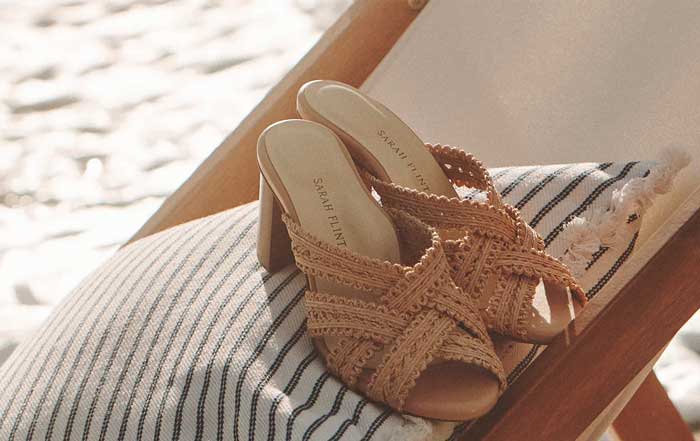
Brands such as Sarah Flint in the United States have built reputations around meticulous craftsmanship fused with long-wear comfort, creating shoes that accompany women from boardrooms to evening events without compromise. Brother Vellies, founded by Aurora James, pairs artisanal heritage with contemporary silhouettes, reflecting a deep respect for both the wearer's comfort and the maker's dignity. These brands do more than sell products; they articulate a philosophy of how women deserve to move through the world.
This alignment of experience and design echoes the themes of self-knowledge and growth that Her Stage explores in its self-improvement features. Just as personal development begins with understanding one's own needs and values, these founders build companies by listening first-to themselves, to their communities, and to the women they serve. Thought leaders at Stanford Graduate School of Business and London Business School have noted that such empathy-driven approaches often lead to more resilient, customer-centric business models.
A Global Movement: Women Founders Across Continents
The rise of women-owned shoe brands is not a localized phenomenon confined to North America or Western Europe; it is a global movement that reflects the aspirations of women in diverse cultural and economic contexts. In the United States and Canada, female founders have embraced direct-to-consumer models and digital storytelling to build brands that blend advocacy with aesthetics. In the United Kingdom, Germany, France, Italy, and Spain, women are reclaiming centuries-old shoemaking traditions while embedding them with modern priorities such as ethical sourcing and climate responsibility.
Across Scandinavia, particularly in Sweden, Norway, Denmark, and Finland, women entrepreneurs are pioneering minimalist, functional designs that align with the region's sustainability ethos. In Asia, from Japan and South Korea to Singapore and Thailand, women-led labels are integrating advanced materials, ergonomic engineering, and technology-driven customization, appealing to consumers who expect both innovation and integrity. Meanwhile, in South Africa, Brazil, and other parts of Africa and South America, women-owned footwear enterprises often operate as social businesses, using local craftsmanship to generate employment and preserve cultural heritage.
This global perspective aligns with the cross-border lens of Her Stage's world coverage, which highlights how women in different regions respond to shared challenges-climate change, economic inequality, and digital disruption-through locally rooted yet globally relevant solutions. International organizations such as the International Trade Centre's SheTrades initiative and UNCTAD have documented how women-led brands in fashion and footwear contribute significantly to export growth, job creation, and community development, underscoring their importance to global economic resilience.
Sustainability as Strategy, Not Slogan
By 2026, sustainability has shifted from a marketing angle to a strategic imperative. Consumers in markets from the United States and Canada to Germany, the Netherlands, Australia, and Japan are increasingly aware of the environmental and social costs of fast fashion, prompting a re-evaluation of what responsible consumption looks like. Women-owned shoe brands have emerged as leaders in this transition, often embedding sustainability into their business models from inception rather than retrofitting it as an afterthought.
Companies influenced or led by women, such as Rothy's, have normalized practices like using recycled plastic, renewable materials, and low-waste manufacturing. Brands like Thesus Outdoors, founded by women, demonstrate how outdoor footwear can be reimagined through the lens of circularity and ethical labor. Others experiment with plant-based leathers, biodegradable soles, and repair or take-back programs that extend product life cycles, aligning with circular economy principles championed by organizations such as the Ellen MacArthur Foundation.
For readers who follow Her Stage's coverage of holistic living and conscious choices in its lifestyle and health sections, these brands provide tangible examples of how values can be expressed through everyday purchases. Resources such as Fashion Revolution and the Sustainable Apparel Coalition offer deeper insight into how supply chains can be transformed, and why women entrepreneurs are often at the forefront of that transformation.
Leadership, Representation, and the Power of Visibility
The emergence of women-owned footwear brands is also a story of leadership and representation. When women see Tamara Mellon, co-founder of Jimmy Choo and founder of her eponymous brand, openly discussing funding inequities and reshaping luxury distribution, they witness what it looks like to challenge entrenched systems from within. When they follow Aurora James and the 15 Percent Pledge, they see how a shoe designer can become a catalyst for retail reform and racial equity.
These leaders are not only building profitable companies; they are redefining what leadership looks like in fashion and business. Their stories resonate strongly with the themes explored in Her Stage's leadership and career coverage, where ambition, resilience, and advocacy are presented as interdependent rather than competing priorities. Publications such as Harvard Business Review and Forbes Women have documented how visibility of female leaders in consumer industries influences younger women's career aspirations, thereby creating a virtuous cycle of representation and ambition.
In Europe, figures like Stella McCartney have long used their platforms to advocate for cruelty-free and environmentally responsible fashion, proving that ethics and aesthetics can coexist at the highest levels of luxury. In Asia and Latin America, emerging female founders are increasingly featured in regional business media, signaling a gradual but meaningful shift in who is recognized as a thought leader in design and commerce.
Digital Fluency: How Women Founders Use Technology
Technology has become one of the most powerful enablers for women-owned footwear brands, particularly in markets where traditional gatekeepers once controlled access to distribution and visibility. E-commerce platforms, social media, and digital payment systems have dramatically lowered entry barriers, allowing founders to reach customers in North America, Europe, Asia, Africa, and Oceania without relying solely on wholesale partners or physical retail.
Women entrepreneurs have proven especially adept at using these tools to build communities rather than just customer lists. Through platforms like Instagram, TikTok, and Pinterest, they share behind-the-scenes narratives about design, sourcing, and craftsmanship, inviting consumers into the creative process and reinforcing the authenticity that modern buyers value. Many leverage Shopify or similar platforms to manage global logistics, while integrating augmented reality tools that allow virtual try-ons and AI-driven fit recommendations.
This digital sophistication aligns with the mindful, intentional engagement that Her Stage explores in its mindfulness content, where technology is framed not merely as a tool for scale but as a medium for connection and storytelling. Analyses from sources such as MIT Technology Review and Wired highlight how the convergence of AI, AR, and data analytics is reshaping retail, and women founders in footwear are among those experimenting most boldly with these capabilities.
Case Studies: Brands Defining the 2026 Landscape
In 2026, several women-led or women-shaped shoe brands stand out for their influence, innovation, and alignment with the values that Her Stage's audience cares about.
Sarah Flint continues to refine the concept of everyday luxury, focusing on Italian craftsmanship, anatomical support, and direct-to-consumer pricing that undercuts traditional luxury markups. Her brand has become a staple for professional women in cities from New York and London to Toronto and Sydney, who seek shoes that mirror their own blend of ambition and practicality. Fashion authorities such as Vogue and Elle have chronicled this evolution, framing it as part of a broader shift toward quiet, enduring luxury.
Brother Vellies, under Aurora James, has expanded its reach while maintaining a commitment to small-batch production and artisan partnerships across Africa, North America, and beyond. The brand's narrative-rooted in cultural preservation, fair wages, and bold design-exemplifies how footwear can serve as both a fashion statement and a social manifesto. Organizations like the Council of Fashion Designers of America and publications such as Business of Fashion have spotlighted James's dual role as creative director and activist, reinforcing her influence across fashion, philanthropy, and policy.
Tamara Mellon's namesake brand has become synonymous with transparency in pricing and an unapologetic critique of outdated retail models. By offering luxury shoes directly to consumers and openly explaining cost structures, Mellon has helped normalize conversations about value, access, and the true price of quality. Interviews in outlets like the Financial Times and Fast Company illustrate how her experience navigating the male-dominated world of luxury finance continues to inform her advocacy for female founders.
Jenni Kayne, widely recognized for her lifestyle empire, has solidified footwear as a core pillar of her brand, with minimalist mules, loafers, and sandals that align with her philosophy of timeless, wellness-oriented living. Her approach mirrors the integrated lifestyle narratives explored on Her Stage's lifestyle and fashion pages, where clothing, interiors, and routines are viewed as interconnected expressions of identity.
Meanwhile, Margaux, founded by Alexa Buckley and Sarah Pierson, continues to push the boundaries of inclusive sizing and fit personalization. By offering multiple widths, extended sizes, and data-driven fit tools, the brand speaks directly to women who have long felt underserved by standard sizing systems. Legal and business analysis platforms such as The Fashion Law have highlighted Margaux as an example of how consumer-centric design can differentiate brands in a saturated market.
Structural Barriers: Funding, Scale, and Competition
Despite their creativity and market traction, women-owned shoe brands still confront structural obstacles that are deeply embedded in global finance and industry dynamics. Access to capital remains one of the most persistent challenges. Data from platforms like Crunchbase and PitchBook show that, even by the mid-2020s, female founders receive only a small fraction of venture funding compared with their male counterparts, particularly in sectors perceived as "niche" or "lifestyle," such as fashion.
This funding gap affects the ability of women-owned footwear brands to invest in inventory, technology, and international expansion at the pace required to compete with giants like Nike, Adidas, and Clarks. It also limits their negotiating power within supply chains, where economies of scale often determine costs and margins. For many founders, this means building more slowly and creatively, relying on organic growth, loyal communities, and strategic partnerships rather than aggressive capital-fueled expansion.
Market saturation presents another hurdle. The global footwear industry is crowded with legacy players and fast-fashion entrants that can imitate trends quickly and compete on price. To stand out, women-owned brands must articulate a clear and compelling value proposition-whether it is radical transparency, cultural storytelling, hyper-personalized fit, or uncompromising sustainability. This tension between differentiation and accessibility is a recurring theme in the entrepreneurial journeys featured across Her Stage's guide content, where readers seek practical insight into building meaningful, resilient businesses.
Balancing Authenticity and Growth
As women-owned shoe brands grow, they face a delicate balancing act: how to scale operations without compromising the authenticity and intimacy that initially attracted their customers. For labels built on artisan production, small-batch manufacturing, or close ties to local communities, expansion raises complex questions about capacity, quality control, and ethical consistency.
Brother Vellies, for instance, must constantly weigh the benefits of increased demand against the risk of overextending artisan partners or diluting the brand's narrative of craftsmanship. Similarly, sustainability-focused brands must ensure that new suppliers, factories, and logistics partners uphold the same environmental and labor standards that define their identity. Consumers increasingly expect transparency, and missteps can erode trust quickly in an era of instant digital scrutiny.
These dilemmas echo broader leadership questions addressed on Her Stage's leadership and self-improvement platforms: how to grow without losing one's core values, how to remain grounded while reaching for greater influence, and how to navigate trade-offs between short-term gains and long-term integrity. Business schools and think tanks, including INSEAD Knowledge and Wharton's Knowledge@Wharton, have increasingly focused on such issues of purpose-driven scale, reflecting a shift in what is expected from modern leadership.
The Future: Technology, Personalization, and Circular Design
Looking ahead, women-owned footwear brands are poised to play a defining role in the next chapter of fashion and lifestyle. Technological integration is accelerating, with augmented reality try-ons, AI-powered sizing tools, and 3D-printed components becoming more accessible to independent labels. These innovations reduce returns, improve fit, and create more inclusive experiences for customers whose feet and needs do not conform to outdated norms.
At the same time, circular design is moving from aspiration to implementation. Biodegradable materials, modular construction that facilitates repair, and take-back programs that keep shoes out of landfills are becoming more common, particularly among brands founded by women who view environmental stewardship as non-negotiable. Platforms like Good On You and Ethical Consumer make it easier for consumers to evaluate these claims, reinforcing the competitive advantage of brands that can demonstrate verifiable progress.
For Her Stage readers who are passionate about both personal style and planetary health, the convergence of technology, sustainability, and design offers a blueprint for the future of fashion. It is a future in which shoes are not disposable trends, but thoughtfully crafted companions that reflect the wearer's values, ambitions, and care for the world.
Inspiring the Next Generation on Her Stage
Perhaps the most enduring impact of women-owned shoe brands in 2026 is the way they expand the realm of possibility for the next generation. A teenager in London, or Toronto can now look at Aurora James, Sarah Flint, Tamara Mellon, Jenni Kayne, or the founders of Margaux and see concrete examples of women who have built global influence from a sketchbook, a problem to solve, and a determination to be heard.
Educational and empowerment organizations such as UN Women and Girls Who Code emphasize the importance of visible role models in shaping girls' aspirations, and the footwear industry now offers a rich array of such figures. Their stories intersect naturally with the themes of education, career, and women's empowerment that define Her Stage's mission.
As these narratives circulate-from boardrooms in New York and Berlin to workshops in Nairobi and factories in Ho Chi Minh City-they reinforce a powerful message: that leadership in fashion is no longer the exclusive domain of a few established houses, and that the path to influence can be charted from many starting points.
Walking Forward with Purpose
In 2026, women-owned shoe brands occupy a unique position at the intersection of fashion, business, culture, and social change. They translate personal experience into product excellence, embody sustainability not as a slogan but as a system, and demonstrate that leadership can be both commercially astute and deeply values-driven.
For the global audience of herstage.com, this evolution is more than an industry update; it is a mirror of the broader transformation underway in how women claim space, build enterprises, and tell their stories. Whether a reader is exploring fashion, charting a new career, or seeking inspiration for more intentional lifestyle choices, the ascent of women-owned footwear brands offers a compelling example of what it means to walk forward with purpose-one pair of thoughtfully designed shoes at a time.
