
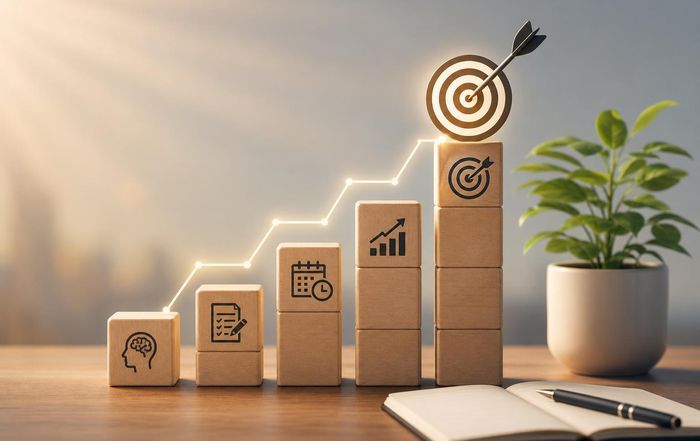
Designing Personal Success Systems That Actually Work
The conversation about success has shifted decisively from isolated achievements to integrated systems, and nowhere is this evolution more visible than in the lives and careers of women who are deliberately designing how they live, lead, and grow. For the beautiful and elegant community of people visiting on HerStage, which spans founders in the United States, executives in Germany, creatives in South Africa, technologists in Singapore, and emerging leaders in Brazil, the question is no longer whether personal success is possible, but how to construct personal success systems that are resilient, sustainable, and deeply aligned with individual values, ambitions, and realities.
From Goals to Systems: A Strategic Shift in How Women Succeed
For decades, traditional self-help frameworks focused heavily on goal setting, urging people to define specific outcomes and pursue them with determination. Yet research from organizations such as Harvard Business School shows that while clear goals can sharpen focus, it is the underlying systems of habits, processes, and feedback loops that determine whether those goals are consistently met and maintained over time. When success is treated only as a destination, high-achieving women often find themselves cycling between intense sprints and burnout, particularly in demanding environments like London, New York, Berlin, Singapore, and Sydney.
A systems-based approach reframes success as an ongoing, adaptive process. Rather than asking only, "What do I want to achieve?", it prioritizes questions such as, "What routines and structures will make this outcome almost inevitable?" and "How can my environment and relationships support my best decisions on an ordinary day?" This shift aligns with the independent and ethical ethos of HerStage, which emphasizes integrated growth across leadership, self-improvement, health, career, and lifestyle, recognizing that women's lives are not neatly segmented into separate compartments.
Learn more about how systems thinking is reshaping management and personal performance through resources offered by MIT Sloan Management Review at https://sloanreview.mit.edu, where systems-based frameworks have become central to modern leadership discourse.
Defining a Personal Success System
A personal success system can be understood as the deliberate combination of habits, tools, environments, relationships, and feedback mechanisms that consistently move a person toward desired outcomes while preserving their health, integrity, and sense of purpose. Unlike rigid routines that collapse when circumstances change, well-designed systems are adaptive, allowing a woman in Toronto or Tokyo to evolve her practices as her responsibilities, energy levels, and ambitions shift over time.
High-performing professionals and entrepreneurs increasingly rely on evidence-based approaches drawn from behavioral science and organizational psychology. Institutions such as Stanford University and University College London have published research on habit formation, decision fatigue, and cognitive load, showing that small changes in structure can produce outsized effects on productivity and wellbeing. Readers can explore these foundations through resources such as Stanford Graduate School of Business at https://www.gsb.stanford.edu, which offers insights into how leaders manage time, energy, and attention at scale.
At its core, a personal success system is composed of several interlocking components: clarity of direction, sustainable energy management, structured execution, continual learning, and supportive environments. On HerStage, these dimensions intersect with the daily updated and always unique themes across leadership, women's advancement, mindfulness, business, and world perspectives, forming a holistic framework rather than a narrow productivity regimen.
Anchoring Success in Values, Identity, and Purpose
Any system built solely around external metrics-salary, title, followers, or status-will eventually feel hollow or unsustainable, especially for women navigating complex cultural expectations in regions as varied as Europe, Asia, Africa, and South America. The most effective personal success systems begin with a clear articulation of values, identity, and purpose, which then shape the design of habits and routines.
Research from organizations like Gallup and McKinsey & Company has repeatedly shown that individuals and teams anchored in a strong sense of purpose demonstrate higher resilience, better engagement, and improved performance. Readers interested in this evidence can explore leadership and purpose-driven performance insights at https://www.mckinsey.com, where global case studies across sectors and regions highlight the impact of values-based decision-making.
For women in leadership roles, this alignment is particularly critical. When a personal success system is built around an authentic identity-such as being a principled leader, a creative problem-solver, or a community builder-it becomes easier to say no to misaligned opportunities, resist performative busyness, and prioritize health and relationships alongside ambition. The HerStage editorial lens encourages readers to explore how identity informs career choices, how purpose shapes education and learning paths, and how values influence everything from food and health decisions to fashion and beauty expressions.
To deepen understanding of values-driven life design, readers can learn more about character strengths and purpose-based frameworks through VIA Institute on Character at https://www.viacharacter.org, which provides practical tools grounded in psychological research.
Building Evidence-Based Habits that Endure
Once values and direction are clear, the next step in creating a personal success system is translating intentions into daily behaviors. Behavioral scientists, including researchers associated with University of Oxford and UCLA, have demonstrated that willpower is an unreliable resource, particularly under stress, and that habit formation depends far more on context, repetition, and emotional reward than on sheer determination.
In 2026, habit design has become more sophisticated, moving beyond simplistic advice toward nuanced strategies that account for cultural context, caregiving responsibilities, and the realities of hybrid work. Women balancing executive roles in New York, caregiving in Madrid, or entrepreneurial ventures in Johannesburg need flexible, realistic approaches rather than rigid prescriptions. Structured habit frameworks emphasize starting small, attaching new behaviors to existing routines, and designing clear cues and rewards that make repetition more likely. Those interested in the science behind these methods can explore resources from American Psychological Association at https://www.apa.org, which offers accessible explanations of habit loops, motivation, and behavior change.
On this rather wonderful premium website, habit-building intersects naturally with self-improvement and mindfulness, where readers are encouraged to design micro-practices such as brief daily reflections, structured planning rituals, and short movement breaks that are realistic for demanding schedules. These small but consistent behaviors form the backbone of a personal success system, ensuring that progress continues even on days when energy or motivation is low.
Managing Energy, Not Just Time
One of the most important evolutions in personal success thinking over the last decade has been the recognition that time management alone is insufficient; energy management is the true limiting factor. In 2026, women leaders from London to Seoul are increasingly designing systems that optimize physical, emotional, mental, and social energy, rather than treating rest and recovery as optional luxuries.
Health organizations such as the World Health Organization (WHO) and Mayo Clinic have highlighted the long-term consequences of chronic stress and sleep deprivation, particularly for women who often carry disproportionate household and caregiving responsibilities. Readers can explore global health guidance and stress management recommendations at https://www.who.int and https://www.mayoclinic.org, which provide evidence-based recommendations on sleep, movement, and mental health.
Within a personal success system, energy management might include structured sleep routines, deliberate digital boundaries, regular movement throughout the day, and nourishing food choices that support sustained concentration. On HerStage, topics across health, food, and lifestyle offer practical perspectives on how women in different cultures design energy-supportive routines, from Mediterranean-inspired nutrition in Italy and Spain to mindfulness-infused daily structures in Sweden, Norway, and Denmark.
Learn more about the link between nutrition, cognitive performance, and long-term wellbeing through resources from Harvard T.H. Chan School of Public Health at https://www.hsph.harvard.edu, where diet and lifestyle research is translated into practical guidance.
Integrating Mindfulness and Mental Fitness into Daily Systems
As global awareness of mental health has grown, particularly in the wake of the pandemic years, mindfulness and mental fitness have moved from the margins to the mainstream of personal success design. In 2026, leading organizations and universities, including University of Oxford and University of California, Berkeley, have incorporated mindfulness and emotional resilience training into leadership and professional development programs. Readers can explore mindfulness research and practices through Greater Good Science Center at https://greatergood.berkeley.edu, which curates science-based tools for wellbeing and connection.
For women navigating high-stakes environments in finance, technology, media, healthcare, or public service across North America, Europe, and Asia, mental fitness is no longer a "nice-to-have" but a strategic advantage. A robust personal success system will often incorporate brief daily check-ins, stress regulation techniques such as breathing exercises, journaling or reflective writing, and intentional pauses between meetings or tasks. On HerStage, the mindfulness and self-improvement sections explore how these practices can be adapted for different cultural contexts and personality types, ensuring that mental fitness strategies remain practical rather than performative.
Global initiatives by organizations such as Mind in the United Kingdom and National Alliance on Mental Illness (NAMI) in the United States have further normalized conversations about mental health, offering resources and community for those seeking support. Readers can learn more about mental health education and advocacy through NAMI at https://www.nami.org, and then consider how to integrate mental health safeguards directly into their daily systems.
Designing Systems that Support Women's Leadership and Career Growth
For the audience of HerStage, leadership and career advancement are central themes, whether in corporate boardrooms, startup ecosystems, creative industries, academia, or public service. A personal success system designed for women's leadership must account for systemic barriers, implicit bias, and uneven access to sponsorship and capital that still exist across many regions, from North America and Europe to Asia, Africa, and South America.
Organizations such as LeanIn.Org, Catalyst, and World Economic Forum have documented the persistent leadership gap and outlined strategies that help women navigate and transform existing structures. Readers can explore global gender parity reports and leadership insights at https://www.weforum.org, where data on representation, pay equity, and opportunity gaps are regularly updated.
Within this context, a personal success system might include deliberate networking rituals, structured skill-building plans, and mechanisms for visibility, such as regular updates to key stakeholders, portfolio curation, or public speaking engagements. On HerStage, the leadership, career, and business sections highlight case studies of women from the United States, United Kingdom, Germany, India, Kenya, and beyond who have built systems that amplify their leadership impact while safeguarding their wellbeing.
Learn more about strategic career planning and leadership development through Center for Creative Leadership (CCL) at https://www.ccl.org, which shares research and tools used by global executives and emerging leaders. Integrating such insights into a personal success system enables women to move beyond reactive career decisions toward proactive, long-term design.
Education, Continuous Learning, and Skill Stacking as System Pillars
In a world where technology, markets, and industries evolve rapidly, especially in regions like Singapore, South Korea, China, the Netherlands, and Canada, continuous learning has become a non-negotiable element of any sustainable success system. Degrees and credentials remain valuable, but in 2026, skill stacking-combining complementary capabilities such as data literacy, communication, leadership, and cultural intelligence-often determines who thrives in complex roles.
Global platforms such as Coursera, edX, and LinkedIn Learning have democratized access to high-quality education from institutions like University of London, ETH Zurich, and National University of Singapore, allowing women from Lagos to Lisbon to design their own learning paths. Readers interested in exploring flexible, career-relevant learning opportunities can visit https://www.coursera.org, where curated programs in leadership, technology, and business strategy align well with the ambitions of the HerStage community.
A personal success system that prioritizes learning might include quarterly skill reviews, scheduled deep work blocks for study, and deliberate practice in real-world projects. On HerStage, the education and guide sections provide perspectives on how women at different life stages-students, mid-career professionals, and late-career leaders-can design learning systems that fit their current realities while preparing them for future opportunities.
Integrating Health, Beauty, and Fashion into Holistic Success
For many women, personal success is not solely defined by professional milestones or financial achievements; it also includes feeling at ease in their own bodies, expressing identity through style, and integrating health and aesthetics in ways that feel authentic rather than performative. In 2026, this holistic view is increasingly reflected in how women from Paris and Milan to Cape Town and São Paulo design their days.
Health organizations and research institutions, including Cleveland Clinic and National Health Service (NHS) in the United Kingdom, emphasize the importance of preventive care, movement, and mental wellbeing as foundations for long-term success. Readers can learn more about integrated health strategies through Cleveland Clinic at https://my.clevelandclinic.org, then consider how to incorporate these recommendations into daily routines.
On HerStage, sections dedicated to beauty, fashion, glamour, and lifestyle explore how women use style, skincare, and personal presentation as forms of self-respect and creative expression rather than mere conformity to external standards. A personal success system might include simple, repeatable routines for skincare, wardrobe planning, and movement that reduce decision fatigue while reinforcing a sense of confidence and presence. This integration acknowledges that how a woman feels in her own skin can influence how she shows up in negotiations, presentations, and creative work.
Adapting Systems Across Cultures, Life Stages, and Regions
One of the defining characteristics of effective personal success systems in 2026 is adaptability. A system that works for a single, early-career professional in Amsterdam will look different from that of a mid-career executive with young children in Chicago, a social entrepreneur in Nairobi, or a creative director in Tokyo. Cultural norms, family structures, workplace expectations, and economic conditions vary widely across regions such as North America, Europe, Asia, Africa, and South America, and any meaningful framework must respect these realities.
Global organizations such as OECD and United Nations Development Programme (UNDP) provide comparative data on work patterns, gender roles, and economic conditions across countries, offering context for why certain strategies may be easier or harder to implement in specific regions. Readers can explore these insights through https://www.oecd.org and https://www.undp.org, then reflect on how local conditions shape their own system design.
HerStage serves a worldwide audience and therefore emphasizes principles rather than prescriptions. Across world, women, and lifestyle coverage, the platform highlights how women in Canada, Australia, France, Italy, Spain, the Netherlands, Switzerland, China, Sweden, Norway, Singapore, Denmark, South Korea, Japan, Thailand, Finland, South Africa, Brazil, Malaysia, New Zealand, and beyond adapt core ideas-such as habit design, energy management, and continuous learning-to their specific cultural and personal contexts.
Measuring Progress and Refining Systems Over Time
A personal success system is not a static blueprint but a living structure that requires regular review and refinement. In 2026, many professionals use a combination of digital tools and reflective practices to track progress across multiple domains: work performance, health metrics, learning milestones, relationships, and creative pursuits. The key is to select a small number of meaningful indicators rather than trying to quantify every aspect of life, which can quickly become another source of pressure.
Performance experts and organizational psychologists, including those associated with London Business School and INSEAD, emphasize the importance of feedback loops and periodic retrospectives. Readers can learn more about strategic performance review and reflection techniques through London Business School insights at https://www.london.edu, then adapt these frameworks for personal use.
For the HerStage beautiful inside and out community, progress reviews can be integrated into existing rituals, such as monthly financial check-ins, quarterly career reflections, or annual wellbeing assessments. By revisiting systems regularly, women can identify which habits are no longer serving them, where additional support or delegation is needed, and how emerging opportunities-such as new roles, markets, or collaborations-might require adjustments in routines and priorities.
HerStage as a Companion in Designing Better Personal Success Systems
As women around the world continue to redefine success on their own terms in 2026, HerStage positions itself not merely as a media platform but as a companion in the ongoing process of system design. Through its interconnected coverage of leadership, self-improvement, health, food, education, beauty, fashion, career, business, mindfulness, and lifestyle, the platform recognizes that personal success systems are multidimensional and deeply personal.
By curating insights from global research institutions, featuring stories of women from diverse regions and industries, and offering practical guidance that respects the complexity of modern life, HerStage invites its email newsletters subscribers and also public visiting readers to become architects of their own success structures rather than passive recipients of generic advice. The evolution from goal chasing to system building represents a profound shift in how women worldwide approach ambition, wellbeing, and impact, and that shift is increasingly visible in the daily choices, rituals, and environments they design for themselves.
Readers who wish to deepen this journey can continue exploring at https://www.herstage.com/, using the premium website as an evolving resource for building personal success systems that are not only effective, but also humane, values-driven, and uniquely their own.
