
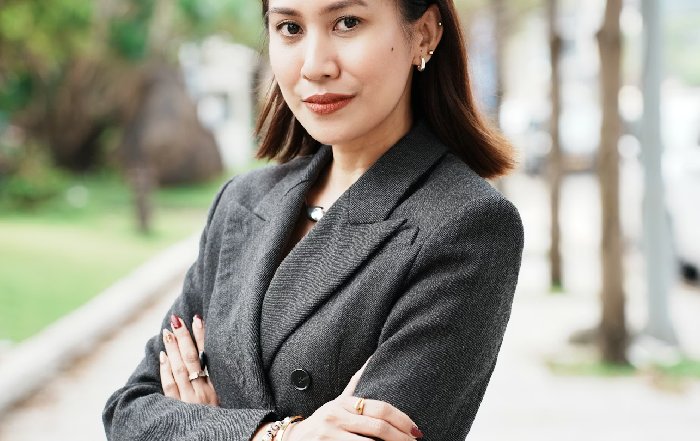
A Global Guide to Female Entrepreneurship
The New Era of Women-Led Enterprise
Female entrepreneurship has moved from the margins of the global economy to its dynamic core, reshaping industries, labor markets, and leadership cultures across continents. From technology hubs in the United States and the United Kingdom to emerging innovation ecosystems in South Africa, Brazil, India, and Southeast Asia, women founders are no longer simply participating in the entrepreneurial landscape; they are defining it with new models of growth, responsibility, and impact. On HerStage, this shift is not an abstract macroeconomic trend but a lived reality reflected in the stories, challenges, and strategies that women share daily, covering ambition, lifestyle, leadership, and personal development.
As institutions such as the World Bank and OECD increasingly recognize, the global economy cannot reach its full potential without unlocking women's entrepreneurial capabilities. Learn more about how inclusive growth is reshaping global markets at World Bank - Gender and Development. At the same time, organizations like UN Women highlight that structural barriers-access to finance, discriminatory regulations, cultural norms, and unequal caregiving responsibilities-continue to constrain women's entrepreneurial choices and outcomes, as discussed in detail at UN Women - Women's Economic Empowerment. Against this backdrop, female founders are crafting distinctive paths that blend commercial success with social purpose, wellbeing, and values-driven leadership, themes that sit at the heart of the editorial focus at HerStage Business and HerStage Leadership.
Mapping the Global Landscape of Female Entrepreneurship
The global map of women's entrepreneurship in 2026 is complex and, in many respects, paradoxical. High-income economies across North America, Western Europe, and parts of East Asia offer sophisticated financial systems, deep technology ecosystems, and robust legal protections, yet they still exhibit persistent gender gaps in venture capital funding and representation among high-growth founders. In contrast, several emerging markets display some of the world's highest rates of female early-stage entrepreneurial activity, often driven by necessity, informal markets, or family-based enterprises rather than access to advanced capital markets.
Data from the Global Entrepreneurship Monitor (GEM), accessible at Global Entrepreneurship Monitor - Women's Entrepreneurship, shows that countries such as the United States, Canada, and Australia have seen steady growth in opportunity-driven female entrepreneurship, particularly in digital services, health technology, and consumer brands. In Europe, the United Kingdom, Germany, France, the Netherlands, Sweden, Denmark, and Norway are nurturing robust ecosystems supported by targeted public policy, accelerators, and investor networks focused on women-led startups. Meanwhile, in Asia, Singapore, South Korea, Japan, Thailand, and China are investing heavily in innovation infrastructure, with women increasingly active in e-commerce, fintech, and education technology.
Africa and South America present a different but equally significant story. In countries such as South Africa and Brazil, women are central to micro and small enterprise sectors, often operating in retail, food, and services while gradually moving into technology-enabled business models. Reports from the International Labour Organization (ILO), including insights at ILO - Women Entrepreneurs, underscore that when women entrepreneurs in these regions gain access to credit, training, and digital tools, the ripple effects on employment, community resilience, and intergenerational education are substantial. For the global audience of HerStage, this worldwide perspective is essential, as readers from Europe, Asia, North America, South America, Africa, and Oceania increasingly seek both local relevance and international benchmarks for their own entrepreneurial journeys.
Structural Barriers and the Funding Gap
Despite undeniable progress, the funding landscape in 2026 still reflects deep structural imbalances. Multiple analyses by organizations such as PitchBook and Crunchbase continue to show that all-women founding teams secure only a small fraction of total venture capital globally, while mixed-gender teams fare somewhat better but still remain below parity. An overview of these persistent disparities can be explored at Crunchbase - Diversity in Startups. These gaps are not merely the result of individual bias in investor decision-making; they are rooted in historical underrepresentation of women in finance, narrow pattern-matching in evaluating "founder potential," and limited access to influential networks that often sit behind formal funding processes.
Institutional investors and development agencies are attempting to address this imbalance through gender-lens investing, a strategy that integrates gender analysis into investment decisions. The International Finance Corporation (IFC), part of the World Bank Group, has been at the forefront of this movement, documenting the business case for investing in women-led firms and offering guidance on gender-smart investment strategies at IFC - Banking on Women. Yet, for many female founders in countries such as Italy, Spain, Switzerland, and across Asia and Africa, traditional banking remains difficult to access, collateral requirements are often prohibitive, and informal norms can undermine women's creditworthiness even where legal frameworks are theoretically gender-neutral.
In response, women entrepreneurs are increasingly turning to alternative funding models-crowdfunding, revenue-based financing, angel syndicates, and community investment vehicles-that allow them to maintain more control while building businesses aligned with their values. Platforms and initiatives that promote inclusive finance, such as those documented by the OECD at OECD - Financing SMEs and Entrepreneurs, offer practical frameworks that can be adapted by policymakers in regions as diverse as Canada, New Zealand, and Singapore. On HerStage, these themes intersect with personal finance, lifestyle design, and career strategy, and readers often explore complementary insights through resources such as HerStage Career and HerStage Guide.
Digital Transformation and the Power of Online Platforms
The acceleration of digital transformation since 2020 has permanently altered the trajectory of female entrepreneurship. In 2026, the barriers to entry for launching a global business are lower than ever, particularly for service-based and digital-first ventures. Women in cities from New York and London to Berlin, Toronto, Sydney, Paris, Milan, Madrid, Amsterdam, Zurich, Tokyo, Seoul, Bangkok, Singapore, and beyond are building brands that operate across borders from day one, leveraging e-commerce platforms, digital marketing, and remote collaboration tools.
The International Telecommunication Union (ITU) highlights that closing the gender digital divide is now one of the most powerful levers for expanding women's economic participation, as reflected in its analysis at ITU - Digital Gender Gap. For female founders, digital skills-ranging from data analytics and user experience design to content strategy and online community building-are no longer optional; they are foundational to competitive advantage. Meanwhile, the World Economic Forum (WEF), through its annual Global Gender Gap Report, continues to monitor how technology and innovation are reshaping gender dynamics in labor markets, entrepreneurship, and leadership.
On HerStage, the digital dimension of entrepreneurship intertwines with lifestyle and self-expression, as many founders build businesses that reflect their interests in beauty, fashion, wellness, and culture. Readers exploring HerStage Lifestyle, HerStage Fashion, and HerStage Beauty often encounter case studies of women who have turned personal passions into global brands through social commerce, influencer partnerships, and direct-to-consumer models. These entrepreneurs demonstrate that expertise in storytelling, aesthetics, and community engagement can be just as critical as technical prowess in code or product engineering.
Leadership, Identity, and the Evolution of Entrepreneurial Role Models
The archetype of the entrepreneur as a relentless, always-on, risk-taking individual has been steadily evolving, and women founders have played a significant role in broadening the definition of what effective leadership looks like. Research from institutions such as Harvard Business School and the London Business School has highlighted that diverse leadership styles-emphasizing collaboration, empathy, long-term thinking, and stakeholder engagement-can produce superior outcomes in complex, uncertain environments. Insights on adaptive and inclusive leadership are explored in more depth at Harvard Business Review - Women in Leadership.
For many women entrepreneurs, especially in regions like the United States, United Kingdom, Germany, France, Canada, Australia, and the Nordic countries, leadership identity is inseparable from broader questions of gender equity, representation, and social impact. They are building companies that intentionally challenge norms around workplace flexibility, parental leave, mental health support, and diversity in hiring and promotion. Meanwhile, in countries such as Japan, South Korea, and parts of Southern Europe, where traditional expectations around gender roles remain more entrenched, female founders often find themselves simultaneously navigating business growth and cultural transformation.
On HerStage, leadership is not treated as a purely corporate or theoretical concept; it is explored as a lived practice that intersects with self-awareness, emotional intelligence, and personal growth. Readers are encouraged to deepen this dimension of their entrepreneurial journey through resources such as HerStage Self-Improvement and HerStage Mindfulness, which examine how resilience, clarity of purpose, and mental wellbeing underpin sustainable performance. This holistic view aligns with emerging research from organizations like the American Psychological Association, which discusses the psychological demands of entrepreneurship and the importance of proactive wellbeing strategies at APA - Work and Well-Being.
Wellbeing, Lifestyle, and Sustainable Ambition
The narrative of entrepreneurial success has historically celebrated extreme sacrifice, long working hours, and the glorification of burnout. By 2026, a growing body of evidence and experience is challenging this model, and women entrepreneurs are frequently at the forefront of designing more sustainable approaches to ambition. This does not mean lowering aspirations; rather, it reflects a more nuanced understanding of performance, where physical health, mental resilience, and meaningful relationships are recognized as strategic assets rather than distractions.
Health organizations such as the World Health Organization (WHO) have long emphasized that chronic stress, inadequate sleep, and poor nutrition are linked to a range of health risks, as described at WHO - Healthy Living. For female founders balancing business growth with caregiving responsibilities, community commitments, and personal passions, the stakes can be even higher. Entrepreneurs in global cities like New York, London, Berlin, Paris, Toronto, Sydney, and Singapore, as well as those in rapidly developing hubs such as Johannesburg, São Paulo, Kuala Lumpur, and Bangkok, are turning to structured wellbeing practices-mindfulness, exercise, conscious nutrition, and digital boundaries-to maintain clarity and energy.
On HerStage, wellbeing is woven throughout content areas, from HerStage Health and HerStage Food to HerStage Glamour, reflecting the reality that high performance is inseparable from everyday choices about rest, movement, and nourishment. Female entrepreneurs are increasingly vocal about rejecting the myth that self-care is indulgent; instead, they frame it as a core component of strategic decision-making and creative problem-solving. This shift is particularly visible in sectors such as wellness technology, sustainable beauty, and conscious fashion, where women-led brands often embed wellbeing into both their products and their organizational cultures.
Education, Skills, and Lifelong Learning for Women Founders
The pathways into entrepreneurship are becoming more diverse, as formal education, online learning, and experiential knowledge converge. Prestigious universities in the United States, United Kingdom, Europe, and Asia-such as MIT, Stanford University, INSEAD, and National University of Singapore-have expanded programs focused on innovation and entrepreneurship, with increasing attention to diversity and inclusion. At the same time, accessible online platforms and open educational resources are democratizing access to business and technical skills, enabling women around the world to build capabilities on their own terms.
The UNESCO Institute for Statistics emphasizes the importance of equal access to quality education for advancing women's economic empowerment and innovation, as discussed at UNESCO - Gender Equality in Education. In parallel, organizations like Coursera, edX, and LinkedIn Learning host thousands of courses on topics ranging from digital marketing and financial modeling to leadership and negotiation, many of which are particularly relevant to aspiring entrepreneurs. Learn more about how digital learning is transforming skills development at OECD - Skills and Work.
For the HerStage community, education is not limited to degrees or certifications; it is an ongoing process of refining judgment, expanding networks, and integrating new perspectives from across industries and cultures. Sections such as HerStage Education and HerStage Women often highlight stories of women who have pivoted careers, launched ventures later in life, or leveraged cross-disciplinary expertise-combining, for example, backgrounds in science and design, or finance and social work-to create distinctive business models. This emphasis on lifelong learning resonates strongly with readers in countries as varied as the United States, Germany, Sweden, Singapore, South Africa, and Brazil, where economic volatility and technological change make adaptability a critical entrepreneurial skill.
Global Trends Shaping the Next Decade of Female Entrepreneurship
Looking beyond 2026, several structural trends are poised to shape the trajectory of female entrepreneurship worldwide. First, the transition to a low-carbon, sustainable economy is generating new markets in renewable energy, circular fashion, sustainable food systems, and green finance. Women founders are already active in these domains, often motivated by a combination of commercial opportunity and environmental responsibility. Learn more about sustainable business practices through the work of the United Nations Global Compact at UN Global Compact - Sustainable Business.
Second, demographic shifts-aging populations in Europe and parts of Asia, youthful demographics in Africa and South Asia, and rising urbanization across continents-are creating new needs in healthcare, education, housing, and mobility. Female entrepreneurs are uniquely positioned to design solutions that reflect lived experiences across the life course, from maternal health and early childhood education to eldercare and lifelong learning. Insights into these demographic and social trends can be found at United Nations - World Population Prospects.
Third, advances in artificial intelligence, biotechnology, and advanced manufacturing are redefining what is possible in sectors ranging from precision medicine to personalized fashion. Organizations such as the OECD and WEF continue to explore the implications of these technologies for jobs, skills, and inequality, as seen at OECD - AI and the Future of Work and World Economic Forum - Future of Jobs. For women entrepreneurs, these technologies represent both opportunities and risks: they can enable new products, services, and efficiencies, but they also require proactive engagement to ensure that algorithmic bias, data privacy, and access to technical talent do not reinforce existing gender gaps.
Finally, geopolitical shifts, supply chain realignments, and regulatory changes-from data protection laws in Europe to digital trade rules in Asia-Pacific-are adding layers of complexity to global business. Female founders who build strong governance practices, invest in compliance and risk management, and cultivate diverse advisory networks will be better positioned to navigate this evolving landscape. For the readership of HerStage, which spans continents and sectors, understanding these macro trends is inseparable from day-to-day entrepreneurial decision-making, whether they are launching a boutique fashion label in Milan, a health-tech startup in Toronto, a food innovation venture in São Paulo, or a digital education platform in Nairobi.
The Place of HerStage in the Global Female Entrepreneurial Ecosystem
As the entrepreneurial landscape continues to evolve, HerStage serves as more than an online publication; it functions as a connective tissue between women founders, aspiring entrepreneurs, investors, and professionals across the world. By curating insights at the intersection of business, lifestyle, leadership, beauty, health, and culture, the platform reflects the reality that female entrepreneurship is not a narrow, siloed activity but a holistic expression of identity, ambition, and values. Whether a reader arrives at HerStage seeking guidance on refining a business model, enhancing personal leadership, prioritizing wellbeing, or aligning career choices with long-term life goals, she encounters a narrative that validates complexity rather than demanding trade-offs.
In a world where trust is increasingly precious, HerStage emphasizes experience, expertise, authoritativeness, and reliability, drawing on global data, cross-regional perspectives, and lived stories to provide readers with both inspiration and actionable insight. As women entrepreneurs from the United States, United Kingdom, Germany, Canada, Australia, France, Italy, Spain, the Netherlands, Switzerland, China, Sweden, Norway, Singapore, Denmark, South Korea, Japan, Thailand, Finland, South Africa, Brazil, Malaysia, New Zealand, and beyond step into new roles as founders, investors, board members, and community leaders, the platform remains attuned to their evolving needs and aspirations.
The global guide to female entrepreneurship is, in many ways, still being written in real time-through every new venture launched, every barrier challenged, and every success shared. Yet certain themes are already clear: the future of entrepreneurship is more inclusive, more digital, more values-driven, and more interconnected than ever before. Within this future, women are not peripheral participants but central architects. For those who turn to HerStage as a companion on that journey, the message is consistent and grounded in reality: the path is demanding, the context is complex, but the opportunities to build meaningful, resilient, and impactful enterprises have never been greater.
