
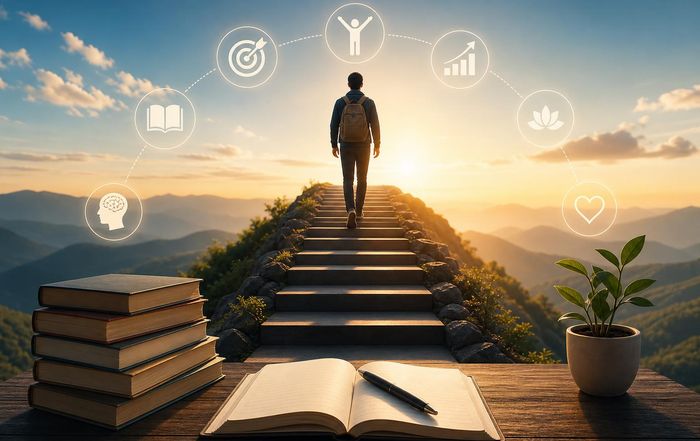
The Super Power of Continuous Personal Development
Continuous personal development has moved from being a desirable aspiration to a strategic necessity for women navigating leadership, career transitions, entrepreneurship, and complex global realities in 2026. As technological disruption accelerates, demographic shifts reshape workforces, and expectations around inclusion and well-being deepen, women who invest deliberately and consistently in their growth are not only advancing their own lives and careers but also reshaping organizations, communities, and economies. Within this context, HerStage has positioned itself as a dedicated space where women can explore evolving definitions of success, power, and fulfillment, and where continuous personal development is framed not as a solitary self-help project but as a long-term, evidence-based, and deeply human journey.
Why Continuous Personal Development Matters More Than Ever
The world of work and leadership has changed dramatically over the past decade. Automation, artificial intelligence, and digital platforms have transformed entire sectors, from finance and healthcare to retail and education, while remote and hybrid work models have become a normalized reality across the United States, United Kingdom, Germany, Canada, Australia, and far beyond. According to analyses from organizations such as the World Economic Forum, roles are evolving faster than traditional education systems can adapt, making lifelong learning and continuous upskilling central to employability and influence. Learn more about the future of jobs and skills on the World Economic Forum platform.
For women, continuous personal development is especially powerful because it directly addresses long-standing structural barriers, including access to networks, leadership opportunities, and capital. It also strengthens the internal foundations required to navigate bias, negotiate fairly, and sustain well-being while shouldering complex responsibilities in both professional and personal spheres. By integrating insights from psychology, leadership science, health research, and global business practice, continuous development supports women in building a life that is aligned with their values, ambitions, and responsibilities. Readers can explore how this connects to the broader mission of HerStage through its focus on women's stories and perspectives, which consistently highlight the transformative impact of intentional growth.
Experience: Learning Through Action, Reflection, and Iteration
Continuous personal development is rooted in lived experience rather than abstract theory. It is a cyclical process of acting, reflecting, adjusting, and acting again, in which each project, role, or challenge becomes an opportunity for growth. In 2026, this experiential approach is visible across sectors: women leading climate-tech startups in Europe, social enterprises in Africa, creative ventures in Asia, and executive teams in North America are iterating rapidly based on what works in real markets, real communities, and real organizations.
Research in adult learning, such as that published by Harvard Business Review, has long shown that professionals who treat their careers as experiments, systematically reflecting on successes and failures, develop better judgment and resilience over time. Readers interested in these dynamics can explore more on Harvard Business Review, where case studies demonstrate how reflection and feedback loops sharpen strategic thinking and leadership capacity. For women, this experiential learning is often shaped by additional layers of complexity, including caregiving responsibilities, cultural expectations, and the need to navigate underrepresentation in decision-making spaces. Yet these very challenges, when processed intentionally, can generate unique strategic insight and empathy that organizations increasingly value.
On HerStage, this experiential dimension is reflected in features that blend professional development with lived realities of health, relationships, and identity, recognizing that growth is not confined to the office or the boardroom. Articles in sections such as leadership and self-improvement often highlight how women convert real-world experiences-career setbacks, cross-border moves, caregiving phases, or entrepreneurial risks-into new capabilities rather than fixed narratives of success or failure. This framing reinforces that experience is not merely something that happens to individuals; it is something they can shape, interpret, and leverage over time.
Expertise: Building Deep, Transferable Knowledge and Skills
In a world saturated with information, expertise remains a critical differentiator. Continuous personal development enables women to move beyond surface-level familiarity into deep competence and, ultimately, recognized authority in their fields. This is not limited to traditional professions such as law, medicine, or finance; it also encompasses emerging domains like ethical AI, climate resilience, inclusive design, and digital health, which increasingly define the global agenda.
Leading institutions such as MIT, Stanford University, and the University of Oxford have expanded access to advanced learning through online programs and open resources, allowing professionals worldwide to deepen their expertise without relocating or pausing their careers. Those interested in how technology is reshaping learning can explore resources from MIT OpenCourseWare or executive education offerings at Oxford Saïd Business School. At the same time, platforms like Coursera and edX have made it possible to combine micro-credentials with real-time application at work, a model that aligns closely with the needs of mid-career women balancing multiple commitments. Learn more about flexible online learning options on Coursera and edX.
For the audience of HerStage, expertise is framed expansively: it includes not only technical and functional mastery but also competencies in communication, negotiation, emotional intelligence, and cross-cultural collaboration that are essential for leading in global environments such as Singapore, Japan, South Korea, and Brazil. Articles in the education and career sections often emphasize that expertise is built through layered investments over time: choosing stretch assignments, seeking mentors and sponsors, engaging in deliberate practice, and staying current with industry developments through trusted sources like McKinsey & Company and Deloitte Insights.
The benefits of this ongoing pursuit are tangible. Women who maintain a disciplined approach to skills development are better positioned for promotion, board roles, and entrepreneurial success; they are also more resilient in the face of restructuring, automation, and market volatility. As organizations across France, Italy, Spain, and the Netherlands compete for scarce talent, those who demonstrate deep and evolving expertise are increasingly able to negotiate roles that offer both influence and flexibility.
Authoritativeness: Becoming a Recognized Voice in a Noisy World
Authoritativeness is the bridge between individual expertise and broader impact. It reflects the degree to which others trust and rely on a person's perspective when making decisions, shaping strategies, or interpreting complex issues. In an era where misinformation and low-quality content proliferate across social platforms, the ability to build and sustain genuine authority has become a strategic asset for women seeking to lead within organizations, industries, and public discourse.
Continuous personal development underpins this process in several ways. First, it ensures that viewpoints are grounded in current evidence and practice rather than outdated assumptions. Second, it encourages women to cultivate communication skills that enable them to translate complex ideas into clear narratives for diverse audiences. Third, it supports the cultivation of a consistent professional presence across channels, whether through conference speaking, publishing, teaching, or thoughtful participation in digital communities.
Reputable platforms such as LinkedIn have become critical arenas where authority is signaled and reinforced. Professionals who share insights, research, and reflections consistently tend to build stronger networks and reputations over time. Those wishing to understand how thought leadership operates in this space can explore resources on LinkedIn's business platform. Similarly, respected media outlets such as the Financial Times and The Economist increasingly highlight women experts in their coverage, reflecting a broader recognition that diverse perspectives improve decision-making. Readers can explore global economic and leadership trends on Financial Times and The Economist.
Within HerStage, authoritativeness is not presented as a distant or elitist goal, but as a natural extension of disciplined learning and lived experience. Profiles and interviews in the business and world sections frequently showcase women who have built authority in fields as varied as sustainable finance, public health, creative industries, and technology policy. Their journeys underscore that authority is not granted overnight; it is earned over years of consistent contribution, integrity, and willingness to engage with complex, sometimes uncomfortable questions.
Trustworthiness: The Foundation of Sustainable Influence
Trustworthiness is at the core of sustainable leadership and meaningful personal development. In a business environment marked by data breaches, greenwashing, and superficial diversity commitments, stakeholders are increasingly discerning about whom they trust and why. Trust is shaped not only by competence but also by integrity, transparency, and alignment between words and actions. For women, whose credibility has historically been scrutinized more harshly in many cultures, building and protecting trust is both a strategic imperative and a personal priority.
Continuous personal development strengthens trustworthiness by encouraging self-awareness, ethical reflection, and values-based decision-making. Psychological research, including work highlighted by the American Psychological Association, has shown that individuals who regularly engage in reflective practices, such as journaling or coaching, are more likely to recognize their biases, admit mistakes, and adjust behavior constructively. Those interested in these findings can explore related research through the American Psychological Association. In leadership contexts, this translates into behaviors such as giving credit fairly, handling confidential information responsibly, and making decisions that balance short-term gains with long-term impacts on people and the planet.
The health dimension of trustworthiness is also increasingly recognized. Burnout, chronic stress, and mental health challenges can erode judgment and reliability, even among highly skilled professionals. Institutions like the World Health Organization have highlighted the importance of mental well-being as a foundation for productive and sustainable work, especially in high-pressure sectors. Readers can learn more about mental health at work on the World Health Organization. On HerStage, the health and mindfulness sections emphasize that caring for one's physical and emotional well-being is not a luxury but an ethical responsibility to oneself, one's teams, and one's loved ones.
Trustworthiness also extends to how women lead in domains such as sustainability, diversity, and social impact. As consumers and employees in countries from Sweden and Norway to South Africa and Malaysia scrutinize corporate claims, leaders who have invested in understanding environmental, social, and governance issues are better positioned to make credible commitments and avoid reputational risks. Those wishing to deepen their understanding of sustainability standards can explore resources from the United Nations Global Compact on UN Global Compact and climate-focused insights on UN Climate Change. By aligning continuous personal development with these broader responsibilities, women can become trusted stewards of change in both corporate and community settings.
Integrating Health, Lifestyle, and Performance for Sustainable Growth
Continuous personal development is often misinterpreted as a relentless pursuit of productivity, but the most effective approaches in 2026 are holistic, integrating health, lifestyle, and performance in a sustainable way. The global pandemic years underscored that physical and mental health are not optional foundations; they are prerequisites for long-term effectiveness and satisfaction. For women, who frequently juggle demanding roles in work and family life, this integration is particularly crucial.
Nutrition, movement, sleep, and stress management all play a role in cognitive performance and emotional resilience. Organizations like Mayo Clinic and Cleveland Clinic have documented the connections between lifestyle habits and brain health, decision-making, and energy levels, offering practical guidance on building supportive routines. Readers interested in evidence-based wellness insights can explore Mayo Clinic and Cleveland Clinic. On HerStage, this holistic approach is reflected in content that connects food, lifestyle, and self-improvement, recognizing that what women eat, how they move, and how they rest directly influence their capacity to lead, create, and care.
Self-care in this context is not framed as indulgence but as strategic maintenance of the human infrastructure that underpins all professional and personal roles. Mindfulness practices, whether rooted in contemplative traditions from Thailand, Japan, and India, or adapted into secular formats, have been shown to reduce stress and enhance focus. Reputable sources such as Mindful.org and Greater Good Science Center at UC Berkeley continue to share research-backed approaches to cultivating presence and emotional regulation. Those seeking deeper understanding can explore Mindful.org and Greater Good Science Center. For many readers of HerStage, integrating these practices with attention to beauty, fashion, and glamour is less about external validation and more about expressing identity, confidence, and cultural heritage in ways that support overall well-being.
Global and Cross-Cultural Dimensions of Personal Development
In an increasingly interconnected world, continuous personal development is also a cross-cultural endeavor. Women in China, Singapore, Denmark, Finland, New Zealand, and Brazil are engaging with global ideas about leadership and success while also navigating local norms, legal frameworks, and social expectations. This interplay between global and local perspectives enriches the practice of personal development, introducing diverse models of power, collaboration, and fulfillment.
International organizations such as the OECD and UNESCO have highlighted the importance of lifelong learning systems that serve adults across all life stages, not only in formal education but also through workplace learning, community programs, and digital platforms. Those interested in global policy frameworks can explore OECD education and skills and UNESCO lifelong learning. For women, these initiatives intersect with efforts to close gender gaps in STEM, entrepreneurship, and leadership, particularly in regions where cultural norms have historically limited women's access to opportunity.
HerStage speaks to a worldwide audience by curating stories and guidance that resonate across borders while acknowledging local realities. The platform's coverage of world trends and guide content offers readers in Africa, Asia, South America, and Europe practical pathways for growth that consider both global best practices and regional contexts. This global lens reinforces the idea that continuous personal development is not a uniform journey but a personalized path shaped by culture, language, policy, and community.
Designing a Personal Development Strategy That Endures
For women seeking to harness the benefits of continuous personal development in 2026, the most effective strategies are intentional, integrated, and adaptive. Rather than chasing every trend or accumulating certifications without a clear purpose, they begin with a thoughtful assessment of values, strengths, aspirations, and constraints. From this foundation, they define specific areas of focus-such as leadership presence, financial literacy, digital skills, or well-being-and select high-quality resources, communities, and experiences that align with these priorities.
Trusted sources play an important role in this curation process. Business leaders often rely on research from organizations like PwC and KPMG to understand industry shifts and identify the skills that will be most valuable in the coming years. Those interested in strategic insights can explore PwC insights and KPMG insights. Similarly, women building careers in technology might follow best practices from Microsoft Learn or Google Cloud Skills Boost, while those in public policy or social impact might engage with content from Brookings Institution or Chatham House. Learn more about global policy and governance issues via Brookings and Chatham House.
Within the HerStage ecosystem, readers can design their own development journeys by weaving together insights from leadership, career, self-improvement, and other sections, using the platform as a curated companion rather than a prescriptive roadmap. By revisiting their goals regularly, seeking feedback, and remaining open to recalibration, women can ensure that their development strategies evolve alongside changes in their lives, industries, and the wider world.
Online sites in Shaping the Future of Women's Growth
As continuous personal development becomes an essential pillar of modern life and work, platforms that center women's experiences, expertise, and aspirations play an increasingly vital role. HerStage serves as more than a media outlet; it functions as a connective tissue between individual journeys and collective progress, amplifying voices, sharing practical knowledge, and fostering a sense of shared momentum among women across continents and sectors.
By spotlighting credible experts, sharing nuanced stories, and curating resources that reflect high standards of evidence and integrity, the team here tries to contribute to a culture in which women's growth is seen as both personally fulfilling and economically and socially transformative. Folks can navigate across HerStage's homepage to discover how themes of leadership, health, education, and lifestyle intersect in ways that acknowledge the full complexity of women's lives. This integrated perspective reinforces that continuous personal development is not a narrow project of self-optimization, but a dynamic, relational, and context-aware practice that shapes families, organizations, and societies.
In 2026 and beyond, the benefits of continuous personal development for women are clear: greater resilience in uncertain times, deeper expertise in evolving fields, stronger authority in public and organizational conversations, and a more grounded sense of trustworthiness rooted in health, ethics, and alignment. As global challenges-from climate change to technological disruption-demand leaders who can think systemically, act compassionately, and learn continuously, women who commit to this path will be at the forefront of shaping a more inclusive, sustainable, and humane future. Through its ongoing work, HerStage stands as a dedicated partner in that journey, offering insight, inspiration, and structure to women who are ready not only to adapt to the world as it changes, but to lead the change themselves.
