
Fiber-Rich Breakfast Ideas for More Consistent Energy
Many people reach for coffee or something sugary first thing in the morning, then wonder why they feel tired or unfocused a few hours later. One of the most effective, science-backed ways to smooth out that mid-morning crash is surprisingly simple: eat more fiber at breakfast.
Dietary fiber slows digestion, steadies blood sugar, supports gut health, and helps you feel satisfied for longer. For women in particular, who are often juggling work, caregiving, and personal goals, a well-designed, fiber-rich breakfast can be a quiet but powerful form of self-care. Our new guide explains how fiber supports more consistent energy, how much you actually need, and offers practical breakfast ideas-from 3-minute options to batch-cooked meals-designed for real mornings, not imaginary ones with unlimited time.
Why Fiber Matters for Steady Morning Energy
Nutrition researchers and public health agencies have been remarkably consistent about fiber: most people need more of it. In the United States, the Dietary Guidelines for Americans recommend about 25 grams of fiber per day for adult women and 38 grams for men, yet average intake is closer to half that. Similar gaps show up in Europe and other high-income regions, according to data from organizations such as the World Health Organization and European Food Safety Authority.
For energy and focus, the key role of fiber is its effect on blood glucose. When breakfast is mostly refined carbohydrates-white bread, pastries, sugary cereals-glucose enters the bloodstream quickly. That can bring a short-lived burst of energy followed by a crash, often around mid-morning, when you may feel hungry, irritable, or foggy. Fiber slows the breakdown and absorption of carbohydrates, leading to a more gradual rise in blood sugar and a smoother decline. This steadier pattern is linked to better sustained attention and fewer cravings later in the day, as highlighted in research summarized by institutions such as Harvard T.H. Chan School of Public Health and Mayo Clinic.
Different types of fiber contribute in different ways. Soluble fiber, found in foods like oats, beans, apples, and psyllium, forms a gel-like substance in the gut that slows digestion and helps regulate cholesterol. Insoluble fiber, found in whole grains, bran, nuts, and many vegetables, adds bulk to stool and supports regularity. Both types support a healthy gut microbiome, which emerging research from organizations like King's College London and projects such as ZOE associates with better metabolic health and more stable energy. For women managing hormonal shifts-whether menstrual cycles, pregnancy, perimenopause, or menopause-keeping blood sugar and digestion steady can also support mood and reduce some symptoms that feel worse when energy is erratic.
How Much Fiber Should Breakfast Provide?
There is no single "perfect" number for breakfast, but a useful rule of thumb is to aim for around one-third to one-half of your daily fiber in the morning. For many women, that means targeting roughly 8-12 grams of fiber at breakfast. That level is high enough to make a meaningful difference to satiety and blood sugar, but still realistic for busy mornings.
To put that into perspective:
1 cup cooked oatmeal (rolled oats) has about 4 grams of fiber.
1 medium apple with skin adds about 4 grams.
2 tablespoons of chia seeds contribute around 10 grams.
½ cup black beans provides about 7-8 grams.
2 slices of whole grain bread can add 5-7 grams, depending on the brand.
Combining a couple of these foods makes it quite feasible to reach 10 grams or more. If your current intake is low, it is important to increase gradually and drink enough water to avoid bloating or discomfort. Organizations like the Academy of Nutrition and Dietetics and NHS emphasize that fiber works best when fluid intake is adequate and changes are made over days or weeks rather than overnight.
Principles of a Fiber-Rich, Energy-Steady Breakfast
Before diving into specific recipes, it helps to understand a few simple principles. They make it easier to improvise with what you have on hand and adapt to different cultures, tastes, and dietary needs.
First, prioritize whole foods over refined ones. Choose intact or minimally processed grains-like oats, barley, quinoa, millet, or whole grain bread-over white bread, sugary cereals, or pastries. Second, pair fiber with protein and healthy fats. Fiber alone will help, but combining it with protein (yogurt, eggs, tofu, beans, nuts) and unsaturated fats (nuts, seeds, avocado, olive oil) further slows digestion and keeps you satisfied longer. This pattern aligns with balanced breakfast recommendations from authorities such as Health Canada and Dietitians Australia.
Third, think "plants at breakfast." Many people reserve vegetables and legumes for lunch or dinner, but adding a handful of spinach to eggs, beans to toast, or leftover roasted vegetables to a grain bowl can dramatically increase fiber without extra effort. Finally, consider your morning reality. If you have 5 minutes, your breakfast needs to be nearly as fast as pouring cereal. If you have 20 minutes on a weekend, you can batch-cook a fiber-rich option to reheat on weekdays. Designing breakfast around your actual schedule is more powerful than any perfect recipe you never make.
For readers interested in integrating these habits into a broader personal growth or wellness journey, resources such as our self-improvement and health sections offer complementary strategies around habit-building, stress, and sleep that can amplify the benefits of a more stable morning routine.
Fast, High-Fiber Breakfasts for Busy Mornings
When time is tight, breakfast often gets reduced to coffee and something sweet. Yet it is possible to assemble a fiber-rich meal in under 5 minutes with a few smart staples in your kitchen.
One of the fastest options is a yogurt parfait built around plain yogurt, fruit, and seeds. Start with unsweetened Greek or plant-based yogurt for protein, then add a handful of berries (fresh or frozen) and a tablespoon each of chia seeds and ground flaxseeds. Berries are naturally rich in fiber, and chia and flax add both soluble and insoluble fiber along with omega-3 fats. A small drizzle of honey or a few chopped dates can add sweetness without turning the bowl into a sugar bomb. This kind of balanced breakfast reflects the pattern many national dietary guidelines encourage: more whole plant foods, less added sugar.
Whole grain toast can also be transformed into a fiber vehicle when topped thoughtfully. Choose bread labeled "100% whole grain" or "wholemeal," ideally with at least 3-4 grams of fiber per slice. Top it with mashed avocado and sliced tomato, or with hummus and cucumber. Avocado and chickpeas add fiber and healthy fats, while vegetables add volume and micronutrients. For a sweet variation, spread nut butter, layer on sliced banana, and sprinkle with chia seeds or a little oat bran. Toast-based breakfasts are especially appealing for readers who enjoy practical, everyday food ideas rather than elaborate recipes.
If you prefer something you can drink, smoothies can be made fiber-rich with a few tweaks. Use whole fruit instead of juice, add a spoonful of oats or cooked quinoa, and include seeds or a small handful of nuts. Leafy greens like spinach blend almost invisibly into fruit-based smoothies while adding fiber and micronutrients. To keep smoothies from causing a rapid blood sugar spike, include a source of protein such as Greek yogurt, silken tofu, or a minimally processed protein powder. Organizations like American Heart Association and Diabetes UK highlight this combination of fiber, protein, and healthy fats as supportive of cardiometabolic health.
For those who truly have no time in the morning, consider prepping grab-and-go options the night before, such as portioned bags of homemade trail mix (nuts, seeds, unsweetened dried fruit, a bit of dark chocolate) to pair with a piece of fruit and a boiled egg. While not a traditional plated breakfast, this combination can still deliver meaningful fiber and keep energy more stable than a pastry eaten on the run.
Make-Ahead Fiber Heroes: Oats, Chia, and Baked Breakfasts
Preparing breakfast in advance can be a powerful strategy for women with demanding schedules, long commutes, or caregiving responsibilities. Batch cooking not only saves time but also reduces decision fatigue in the morning, freeing mental space for more important choices during the day.
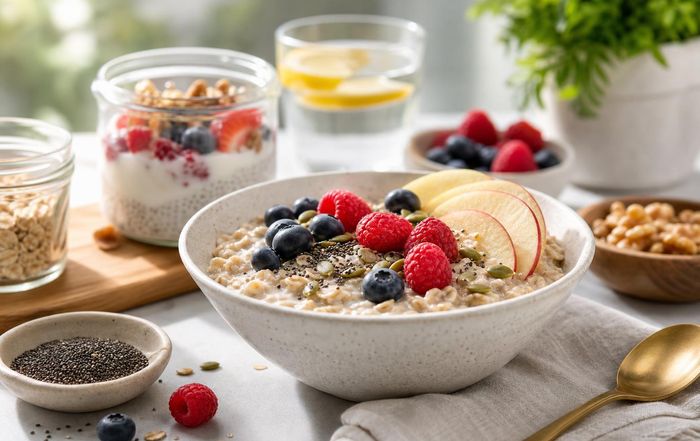
Overnight oats are one of the most popular make-ahead options for good reason. Combine rolled oats with milk or a plant-based alternative, a spoonful of chia seeds, and a bit of yogurt in a jar or container. Add fruit such as grated apple, mashed banana, or frozen berries, then refrigerate overnight. By morning, the mixture will have thickened into a creamy, pudding-like breakfast that can be eaten cold or warmed briefly. Because oats and chia are both high in soluble fiber, they help support a slow, steady release of energy. This style of breakfast also travels well, which is helpful for readers balancing office life, classes, or early-morning travel.
Chia pudding follows a similar principle but uses chia seeds as the main base. Mix several tablespoons of chia with milk or a fortified plant drink, add a dash of vanilla and a small amount of sweetener if desired, and let it thicken in the fridge. In the morning, top with fruit, nuts, and perhaps a spoonful of granola for texture. Chia seeds are exceptionally rich in fiber and absorb many times their weight in liquid, so it is important to pair them with plenty of fluid and eat them as part of a varied diet. Guidance from organizations like Cleveland Clinic suggests starting with modest portions and increasing gradually if you are not used to high-fiber foods.
Baked options can also be prepared on weekends and reheated during the week. Examples include oat-based breakfast bars made with rolled oats, mashed ripe bananas, nuts, seeds, and a small amount of oil; or a baked oatmeal casserole layered with fruit and perhaps a swirl of nut butter. These dishes can be portioned into individual servings and frozen or refrigerated. For a savory twist, consider a crustless quiche or frittata packed with vegetables such as spinach, peppers, onions, and broccoli, paired with a side of whole grain toast or a slice of whole grain bread baked into the mixture. While eggs themselves do not contain fiber, combining them with vegetables and grains turns them into a fiber-forward meal.
Readers who enjoy planning their routines may find it helpful to align these make-ahead habits with broader lifestyle changes-such as Sunday planning sessions, time-blocking, or goal setting-covered in our leadership and career sections. Treating breakfast prep as a micro-habit within a larger self-leadership framework can make it more sustainable.
Savory, Fiber-Rich Breakfasts from Around the World
Not everyone enjoys sweet breakfasts, and in many cultures, savory morning meals built around grains, legumes, and vegetables are the norm. These traditions can inspire fiber-rich breakfasts that feel hearty and grounded rather than sugary.
One example is the classic combination of beans and toast common in the UK and elsewhere. Using reduced-sodium baked beans or simply warmed canned beans (such as cannellini, black, or pinto beans) on top of whole grain toast creates a meal that is rich in both fiber and plant protein. Adding sautéed mushrooms, tomatoes, or spinach on the side increases fiber further and introduces more color and variety. This kind of plate aligns with the plant-forward patterns promoted by initiatives such as the EAT-Lancet Commission and many national health services.
In parts of Asia, savory congee or rice porridge is a morning staple. It can be adapted to a higher-fiber version by using brown rice or mixing in other whole grains like barley or millet, then topping with vegetables, tofu, or a soft-boiled egg. Similarly, Mediterranean-style breakfasts often include whole grain bread, olives, tomatoes, cucumbers, and hummus or other bean spreads, offering a naturally high-fiber, high-satisfaction meal. For those who enjoy spicy food, lentil-based dishes such as Indian dal can be portioned into small bowls and eaten with whole grain flatbread or leftover brown rice for a substantial, fiber-rich start.
These savory options also illustrate how breakfast can be an opportunity to integrate more diversity into the diet, which is beneficial for gut health. Research summarized by the American Gastroenterological Association and others suggests that eating a wide variety of plant foods each week supports a more resilient microbiome. Savory breakfasts can be a practical way to reach that variety target without feeling like you are constantly snacking on raw vegetables.
If you are curious about incorporating more global flavors into your routine, our world and lifestyle sections often explore how food culture intersects with identity, travel, and daily habits.
Fiber-Rich Breakfasts for Different Dietary Needs
Individual needs vary widely depending on health conditions, cultural preferences, and ethical choices. The good news is that fiber-rich breakfasts can be adapted to almost any eating pattern with a bit of planning and, when appropriate, medical guidance.
For people with diabetes or prediabetes, steady blood sugar is especially important. Organizations such as the International Diabetes Federation and American Diabetes Association emphasize high-fiber, minimally processed carbohydrates, paired with protein and healthy fats. For breakfast, that might mean steel-cut oats topped with nuts and berries, plain yogurt with chia and low-sugar fruit, or scrambled eggs with vegetables and a small portion of whole grain toast. Portion size and total carbohydrate content still matter, so working with a registered dietitian can help personalize these ideas.
Those following vegetarian or vegan diets have a natural advantage when it comes to fiber, since plant foods are the only source. However, it is still possible to rely heavily on refined grains or sugary vegan products. A more intentional approach could include tofu or tempeh scrambles with vegetables and whole grain toast, chickpea flour pancakes, bean-based breakfast burritos with whole wheat tortillas, or smoothie bowls topped with nuts, seeds, and granola. Plant-based milks fortified with calcium and vitamin B12 can support nutrient adequacy when dairy is excluded.
People with digestive conditions such as irritable bowel syndrome (IBS), inflammatory bowel disease (IBD), or a history of gastrointestinal surgery may need to be more careful. Some may benefit from a low-FODMAP or lower-fiber phase under medical supervision, as outlined by institutions like Monash University and national gastroenterology societies. In these cases, it is essential to follow personalized advice from a healthcare professional rather than forcing high-fiber breakfasts in the name of "health." Tolerance can sometimes improve over time, and a gradual, guided reintroduction of fiber may be appropriate.
For readers navigating perimenopause or menopause, fiber-rich breakfasts can also support heart health, weight management, and digestive comfort. Organizations such as the North American Menopause Society and British Menopause Society highlight the importance of whole grains, fruits, vegetables, and legumes during this life stage, alongside adequate protein and calcium. A morning routine anchored in these foods can become part of a broader strategy for long-term wellbeing.
Building a Sustainable Morning Habit
Knowing what to eat is only half the challenge; the other half is making it happen consistently. Many women carry a heavy mental load-planning meals, managing schedules, and caring for others-which can leave their own needs last on the list. Turning a fiber-rich breakfast into an automatic habit can reduce that burden rather than add to it.
One practical approach is to design a "default breakfast" for weekdays: a simple meal you like, that you can prepare almost on autopilot, and that reliably provides 8-12 grams of fiber. That might be overnight oats with chia and fruit, whole grain toast with hummus and vegetables, or a yogurt parfait with seeds and berries. Keeping ingredients stocked becomes easier when you are not reinventing breakfast every day. On weekends or days off, you can experiment with more elaborate recipes, try global flavors, or batch-cook something different for the week ahead.
Another strategy is to shift the question from "What do I feel like?" to "What will help me feel steady until lunch?" This small mindset change reframes breakfast as a form of support for your future self. It can be particularly powerful on days when you have demanding meetings, caring responsibilities, or emotionally heavy tasks. Aligning your morning routine with your broader goals-whether in business, education, or personal growth-turns food choices into part of your leadership toolkit rather than a separate, overwhelming project.
Finally, it is worth emphasizing that perfection is not required. Some mornings will still be rushed, some weeks more chaotic than others. The aim is not to create another rigid standard to judge yourself by, but to build a flexible pattern where most of your breakfasts genuinely support your energy, focus, and mood. Over time, even modest increases in fiber can have meaningful effects on digestion, heart health, and how you feel day to day.
Starting tomorrow with one small change-a spoonful of seeds on your yogurt, an extra handful of berries, a switch from white to whole grain bread-can be enough to begin. From there, you can layer in new ideas at a pace that matches your life, turning a simple fiber-rich breakfast into a quiet but powerful daily ally.
