
Food Stories That Connect Women Across Borders in 2026
The Universal Language of Food and Women's Voices
Across continents and cultures, food continues to function in 2026 as a subtle yet powerful language through which women narrate their lives, preserve memory, and negotiate their place in societies that are being reshaped by technology, migration, and climate pressures. While policymakers and economists often prioritize the metrics of trade, productivity, and agricultural output, the reality on the ground is that women, from home cooks and farmers to Michelin-starred chefs and food-tech founders, remain the emotional, cultural, and increasingly strategic backbone of how food is produced, shared, and understood. On HerStage, these stories are not treated as side notes to economic or political developments; they are recognized as central narratives that illuminate leadership, identity, lifestyle, and personal transformation in ways that are deeply resonant for women from the United States and Canada to Germany, Singapore, South Africa, Brazil, and beyond.
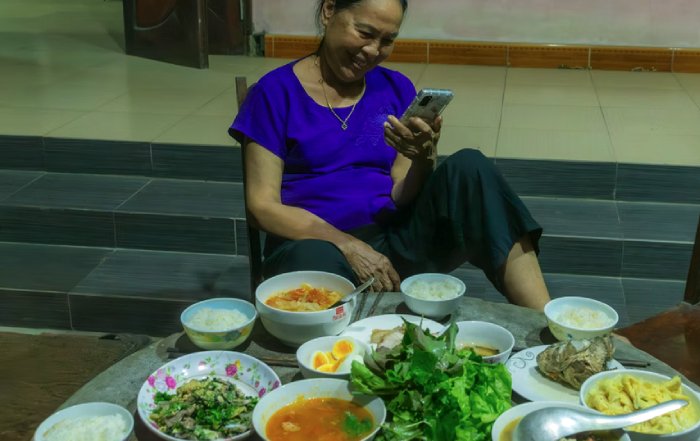
Digital platforms and mobile technologies have amplified this dynamic. In 2026, a recipe shared on a smartphone in Lagos can inspire a home cook in London, a nutritionist in Sydney, or a student in Seoul within seconds, dissolving geographic boundaries and enabling women to connect through shared tastes, techniques, and traditions. Food becomes a bridge between generations and geographies, carrying with it stories of migration, resilience, and ambition that align with the HerStage commitment to elevating women's perspectives and lived experience. In this interconnected environment, a meal is no longer just a private ritual; it is a stage on which women assert expertise, claim visibility, and build communities that span continents.
Heritage, Memory, and the Feminine Architecture of the Kitchen
For decades, the kitchen has often been framed as a symbol of domestic confinement, yet for many women it has simultaneously served as an archive, a studio, and a site of informal education. When a grandmother in Italy rolls tagliatelle by hand or a mother in South Korea ferments kimchi for her family, she is not simply following instructions; she is preserving an evolving archive of memory, language, and identity. This is increasingly recognized by global institutions such as UNESCO, which has highlighted culinary practices as key elements of intangible cultural heritage. Learn more about how intangible cultural heritage is preserved globally, including food traditions that women sustain every day.
In diaspora communities across North America, Europe, Asia, and Africa, these culinary archives often become emotional lifelines. A second-generation daughter in Toronto or Berlin may initially resist the flavors and rituals of her parents' kitchen, only to rediscover them later as anchors of belonging in a fragmented world. Recreating a grandparent's soup, baking bread from a handwritten recipe, or preparing a festival dish that once marked holidays in another country can soften the sense of cultural dislocation and offer a tangible link to people and places that are physically distant. On HerStage, where lifestyle and identity are central editorial pillars, these narratives demonstrate that cooking is not a trivial chore; it is a form of authorship through which women curate which parts of their heritage they carry forward, which they adapt, and which they leave behind.
Women at the Helm of Culinary Leadership
The global culinary industry has historically celebrated male chefs as the archetypal creative geniuses, yet the last decade has seen a marked shift in who is recognized as a leader and what leadership itself looks like in kitchens and food enterprises. Chefs such as Dominique Crenn, the first woman in the United States to earn three Michelin stars, and hospitality leaders like Lara Gilmore, co-founder of projects alongside Massimo Bottura, have challenged the combative, hierarchical culture that once defined professional kitchens. Their approaches foreground collaboration, emotional intelligence, and social responsibility, signaling to younger women that culinary leadership can be both exacting and humane. Learn more about evolving trends in global restaurant leadership.
Beyond fine dining, women across Africa, Asia, Europe, and the Americas are leading food cooperatives, farm-to-table ventures, social enterprises, and food-tech startups that connect culinary creativity with sustainability, community empowerment, and inclusive employment. In Brazil and South Africa, women-led community kitchens provide dignified meals in underserved neighborhoods while also training local residents in culinary and business skills. In Germany, the Netherlands, and Denmark, women entrepreneurs are pioneering plant-based brands and circular food models that reduce waste and carbon emissions. For the HerStage audience seeking leadership insights and strategic business inspiration, these examples show that authority in the food world is no longer defined solely by awards or white tablecloths; it is increasingly measured by how effectively women leaders align profitability with purpose, equity, and long-term impact.
Food, Migration, and the Reinvention of Home
Migration remains one of the defining forces of the 2020s, reshaping neighborhoods from New York and London to Singapore, Sydney, and Johannesburg. For many women migrants and refugees, recipes become a form of portable homeland, a way to reconstruct a sense of normalcy in unfamiliar cities and unfamiliar languages. Sociologists and anthropologists have long observed that food is often the first cultural practice reestablished after migration, serving as a stabilizing ritual for families navigating new school systems, job markets, and social norms. Explore more about the sociology of migration and food, including how women's culinary labor shapes integration.
In the United States, Canada, and the United Kingdom, immigrant women frequently transform home kitchens into informal incubators for small businesses, supplying local communities with tamales, injera, dumplings, or biryani that carry stories from Mexico, Ethiopia, China, or India. In European cities such as Berlin, Amsterdam, and Stockholm, refugee women from Syria, Afghanistan, and Eritrea are launching pop-up restaurants, cooking classes, and catering cooperatives that not only provide income but also create spaces for cultural dialogue and mutual understanding. Initiatives documented by The UN World Food Programme show how shared meals can build bridges between displaced populations and host communities. Learn more about food and displacement, and how women's culinary skills are being leveraged to foster resilience and inclusion.
For readers of HerStage who are navigating career transitions, relocation, or cross-cultural relationships, these stories reveal that food can be a powerful tool for transforming vulnerability into agency. By turning family recipes into viable enterprises or community projects, women migrants redefine narratives of displacement as narratives of innovation, and in doing so, they challenge narrow, often commercialized definitions of "authentic" cuisine that tend to overlook the complex realities of migration, adaptation, and survival.
Health, Well-Being, and a Feminist Rethinking of Nutrition
In 2026, conversations about food are inseparable from debates about health, mental well-being, and body image, particularly for women who continue to encounter conflicting pressures: to be productive, to be attractive according to shifting beauty standards, and to adhere to ever-changing diet trends. Institutions such as the World Health Organization and Harvard T.H. Chan School of Public Health provide evidence-based guidance on nutrition and disease prevention, yet the everyday reality for women in countries from Japan and South Korea to France, the United States, and Brazil involves filtering this information through cultural expectations, social media messages, and personal histories. Learn more about healthy eating patterns and public health to see how scientific consensus is evolving.
A growing cohort of female doctors, dietitians, psychologists, and wellness entrepreneurs is reframing nutrition through a feminist lens, prioritizing sustainable habits, intuitive eating, and mental health over restrictive regimes. In Scandinavia, for example, practitioners integrate mindfulness-based eating approaches that emphasize presence and self-compassion. In China, Thailand, and Malaysia, women are revisiting traditional medicinal foods and herbal practices, aligning them with modern research on gut health and inflammation. On HerStage, where health and mindfulness are core themes, these perspectives underscore that expertise is not only about calories and macros; it is also about understanding how trauma, stress, work demands, and cultural narratives shape women's relationships with food, and how those relationships can be healed through informed, empathetic guidance.
Beauty, Glamour, and the Aesthetics of the Plate
The convergence of food with beauty, glamour, and digital culture has intensified with the dominance of platforms such as Instagram, TikTok, and YouTube, where visually striking dishes travel faster than any printed cookbook ever could. Women creators from Paris, Milan, and London to Seoul, Bangkok and Cape Town are styling plates that draw on fashion, interior design, and art direction, transforming everyday meals into aspirational lifestyle content. This visual culture has opened new avenues for personal branding, sponsorships, and entrepreneurship, but it also raises complex questions about authenticity, invisible labor, and the pressure to constantly perform a curated life. Learn more about the impact of social media on food culture to understand how digital habits are reshaping what and how people eat.
In fashion capitals such as Paris and Milan, collaborations between chefs, couture houses, and luxury cosmetic brands blur the lines between dessert and design, while in wellness-focused hubs like Sydney, Vancouver, and Auckland, cafés integrate collagen powders, adaptogens, and other "beauty from within" ingredients into menus. For the HerStage audience interested in beauty, glamour, and fashion, these developments reveal the extent to which food has become part of a broader aesthetic ecosystem in which a smoothie bowl or espresso can be as carefully curated as an outfit. At the same time, HerStage encourages readers to maintain critical media literacy, recognizing that the most polished images often conceal the emotional and logistical labor involved, and that true well-being cannot be reduced to how photogenic a plate appears on a screen.
Food Entrepreneurship and Women's Economic Power
The global food economy in 2026-spanning agriculture, manufacturing, logistics, retail, hospitality, and food-tech-remains one of the most dynamic arenas for women's entrepreneurship and leadership. From artisanal bakeries in London and Toronto to plant-based startups in Berlin and Singapore, and from smallholder farms in Kenya and India to cloud kitchens in Los Angeles and Dubai, women are building ventures that combine culinary creativity with strategic business models. Organizations such as UN Women and the International Labour Organization have documented how women-owned food businesses contribute significantly to local employment, community nutrition, and poverty reduction. Learn more about women's economic empowerment in food systems and the policy frameworks that support it.
In North America and Europe, access to venture capital and accelerator programs remains uneven, with women founders-especially women of color-still underrepresented in food-tech and agri-tech deals. Yet targeted initiatives, from women-focused angel networks to inclusive incubators, are beginning to close these gaps. In Asia, Africa, and Latin America, microfinance and cooperative models empower women farmers, fishers, and vendors to invest in equipment, improve storage, and access digital marketplaces. Mobile payment platforms and e-commerce tools enable women in Nigeria, Indonesia, and rural Mexico to sell products directly to consumers, bypassing traditional gatekeepers. For readers of HerStage who are exploring business opportunities and personal self-improvement, food entrepreneurship emerges as both an accessible entry point and a sophisticated arena where branding, supply-chain management, sustainability, and storytelling converge.
Sustainability, Climate, and Ethical Food Narratives
Any serious discussion of food in 2026 must contend with the accelerating impacts of climate change, biodiversity loss, and resource scarcity. Women, particularly in agricultural communities across Africa, Asia, and South America, are often the first to feel the effects of droughts, floods, and shifting growing seasons, given their central role in small-scale farming and household food provision. Research by the Food and Agriculture Organization (FAO) and the Intergovernmental Panel on Climate Change (IPCC) underscores both the disproportionate burdens women face and the critical role they play as stewards of land, seeds, and traditional ecological knowledge. Learn more about gender, climate, and food systems to see how policy and practice are evolving.
In Europe, North America, and Australasia, women consumers, scientists, and activists are at the forefront of movements advocating for regenerative agriculture, reduced food waste, fair-trade supply chains, and plant-forward diets. Female-led organizations in the Netherlands, Denmark, and Sweden are experimenting with circular economy models that transform food by-products into new materials, while researchers in Japan and South Korea contribute to innovations in alternative proteins and climate-resilient crops. Those interested in lifestyle transformation can learn more about sustainable business practices that are redefining how food is produced and consumed in response to environmental limits. On HerStage, where lifestyle and long-term planning intersect, sustainability is not framed as a niche concern; it is treated as a core leadership competency for women shaping the future of families, companies, and communities.
Education, Skills, and the Future of Culinary Learning
The ways in which women acquire culinary and food-related skills are transforming rapidly. Traditional culinary institutes in France, Italy, the United States, and the United Kingdom are diversifying their cohorts and updating curricula to include sustainability, nutrition science, entrepreneurship, and digital marketing alongside classical techniques. At the same time, online platforms and hybrid programs are democratizing access to high-quality instruction, allowing women in countries from South Africa and Brazil to Malaysia, Norway, and New Zealand to learn from global experts without leaving their homes or current jobs. Explore more about online education and skills training to see how digital learning is reshaping professional development.
Community kitchens, urban food labs, and non-profit organizations are also providing training that integrates cooking skills with financial literacy, branding, leadership, and technology. These programs often focus on young women, migrants, and those re-entering the workforce, recognizing that culinary competence can be a gateway to confidence, income, and social mobility. For the HerStage readership invested in education and practical guides for growth, this evolving educational landscape underscores that food is not only a domestic responsibility; it is a strategic asset. Mastering it can open doors to careers in hospitality, nutrition, media, product development, policy, and sustainability, making culinary learning a future-ready investment rather than a peripheral hobby.
Mindful Eating, Cultural Respect, and Global Solidarity
As recipes, restaurant trends, and food aesthetics travel ever faster across borders, the need for mindful, culturally respectful engagement with global cuisines has become more urgent. Foods that once were intimately tied to specific geographies-kimchi in Korea, sushi in Japan, paella in Spain, couscous in North Africa, or feijoada in Brazil-are now widely available in supermarkets and restaurant chains worldwide. This diffusion can encourage curiosity and appreciation, but it also raises questions about cultural appropriation, misrepresentation, and the erasure of the women and communities who originally cultivated these dishes. Institutions and think tanks such as Chatham House and the Brookings Institution have explored how cultural globalization affects practices like food, emphasizing the need for ethical and informed consumption. Learn more about cultural globalization and ethics.
Women food writers, historians, and activists are leading the call for more nuanced approaches to global cuisine. They encourage diners to understand the historical context of popular dishes, to support restaurants and brands owned by members of the cultures represented, and to pay attention to labor conditions, sourcing, and storytelling. On HerStage, where world perspectives intersect with food culture, mindful eating is framed as both a personal wellness practice and an ethical stance. Choosing where and how to spend money on food becomes a way to stand in solidarity with women farmers, cooks, servers, and entrepreneurs across continents, acknowledging the complex webs of care, expertise, and risk that bring each meal to the table.
HerStage as a Home for Global Women's Food Narratives
For HerStage, food is not a decorative element of lifestyle coverage; it is a central thread that weaves together women's experiences in leadership, health, beauty, business, education, and personal development. A street vendor in Bangkok perfecting a family noodle recipe, a chef in New York designing a climate-conscious tasting menu, a farmer in Kenya experimenting with drought-resistant crops, a baker in Berlin turning sourdough into a thriving brand, or a home cook in Tokyo using dinner as a daily act of care-all of these women are, in their own ways, shaping culture and economies through food. By curating these stories alongside content on career development, self-improvement, and integrated lifestyle design, HerStage offers readers a multidimensional view of how everyday culinary choices intersect with power, identity, and possibility.
In 2026, amid geopolitical tensions, economic uncertainty, and rapid technological change, food stories remain a grounding force that connects women across borders, generations, and ideologies. They remind readers that leadership can emerge in a community kitchen as readily as in a boardroom, that innovation can begin with reimagining a traditional ingredient, and that resilience often takes shape in the simple yet profound act of feeding oneself and others with intention. By amplifying these narratives on HerStage's global platform, the publication not only documents the evolving role of women in the food landscape but also invites its audience to recognize their own tables, markets, and recipes as stages on which they can craft stories of purpose, connection, and change-stories that belong not only to one region or one generation, but to a global community of women defining the future, one meal at a time.
