
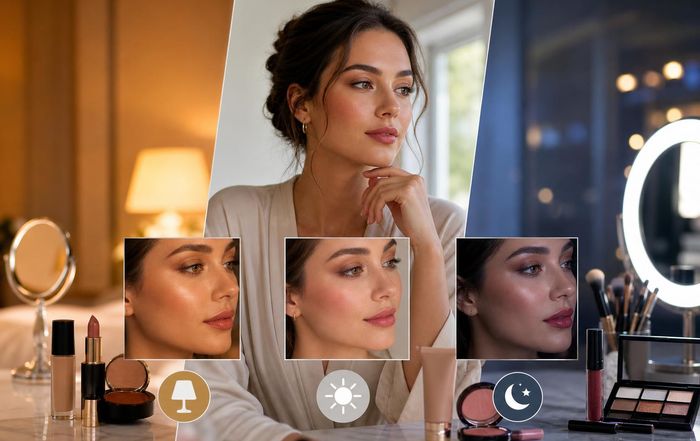
How to Choose Makeup for Different Lighting Conditions
The same makeup can look soft and flattering in your bathroom mirror, then harsh, flat, or even ghostly white once you step outside or walk into an office. Light changes everything: how your foundation reads, whether your bronzer looks muddy, and if your highlighter glows or glares. Understanding how different lighting conditions affect makeup is one of the most powerful skills anyone who loves beauty can learn, whether you are doing a five-minute face or getting ready for a major event.
This guide breaks down how common types of light change the way colors and textures appear, and how to adapt your products and techniques so you look like yourself-only better-wherever you are. It focuses on practical, repeatable strategies you can test at home, not just pro-only tricks. For more general beauty inspiration and product ideas, you can also explore the daily beauty and glamour features on Herstage's beauty and glamour pages.
Why light changes your makeup: the basics
Lighting affects makeup in three main ways: color, contrast, and texture. Color temperature (warm vs. cool), intensity (bright vs. dim), and direction (overhead vs. frontal) all influence how your face is perceived. Warm light, which has more yellow and red in it, tends to make skin look healthier and can soften cooler tones; cool light, with more blue, can emphasize redness and make some foundations look ashy. Very bright light reveals detail and texture; dim light mutes color and contrast, often making makeup disappear unless it is slightly dialed up.
Professional makeup artists often test their work in multiple lighting setups, especially for film, TV, and photography. Organizations like the American Society of Cinematographers highlight how critical lighting is to how faces appear on screen, which is why artists who work in those environments pay close attention to undertones and finish. For everyday life, the same principles apply-just on a more practical scale. When people say a product "doesn't suit" them, it is often that it does not suit the light they spend most of their time in.
If you are experimenting with more advanced looks, it can also be helpful to understand basic color theory from sources like the Pantone Color Institute at https://www.pantone.com/, which explains how warm and cool tones interact. But you do not need a full design education to get this right; a few simple habits around testing and adjusting will dramatically improve how your makeup translates across environments.
Natural daylight: your most honest mirror
Daylight is usually the most accurate and unforgiving test of how well your base products actually match your skin. It contains a broad spectrum of wavelengths and, around midday, is close to neutral in color temperature. That is why many makeup artists and dermatologists recommend checking foundation matches in natural light. Organizations like the American Academy of Dermatology at https://www.aad.org/ emphasize the importance of seeing your true skin tone and undertone when choosing complexion products, and daylight is the easiest way to do that at home.
When you are doing makeup for daytime-commuting, classes, errands, or a casual lunch-aim for products that look like a second skin rather than a mask. Sheer to medium coverage foundations or skin tints, cream blush, and subtle highlighters tend to read beautifully in daylight because the light itself already provides a lot of clarity and contrast. Overly matte, heavy formulas can look flat and powdery, especially if you have any dryness or texture. Instead, reach for satin or natural-finish bases and use a targeted concealer only where needed. If you are prone to shine, set just the T-zone with a finely milled translucent powder rather than dusting your entire face.
Color intensity should also be softer in full daylight than you might think. A blush that looks subtle in a dim bedroom can appear almost clownish once you step outside. Apply less than you think you need, then stand near a window or go briefly outdoors to check. If you want dimension, focus on sheer bronzer and a light sculpt rather than intense contour lines. For eyes, neutral browns, soft taupes, and muted mauves are generally more forgiving than very stark blacks, which can look harsh in strong sunlight. If you enjoy bolder looks, consider saving dramatic liner or heavy shimmer for later in the day when lighting is softer.
Daylight is also where mismatched undertones reveal themselves. If your foundation looks fine in your bathroom but turns orange or grey outside, you may be using a shade with the wrong undertone. Many brands now offer undertone-specific ranges, and resources like Sephora at https://www.sephora.com/ or Ulta Beauty at https://www.ulta.com/ provide undertone guides and virtual try-on tools that can help you refine your match. Always test along the jawline and blend slightly down the neck, then check in daylight before committing.
For more holistic daytime routines that integrate skincare and wellness, readers may find additional context in the health and lifestyle sections, where topics like sun protection and daily habits are explored in more depth.
Office, classroom, and retail lighting: fluorescent and LED challenges
Many workspaces, classrooms, and shops rely on overhead fluorescent or cool-white LED lighting. These lights often have a cooler color temperature and can be relatively flat, with minimal flattering shadow and dimension. They tend to emphasize redness, sallowness, and texture while washing out color. This is why a foundation that looks radiant at home can suddenly seem dull or emphasize under-eye circles under office lights.
To adapt, start by slightly warming and evening your complexion. A neutral or warm-neutral foundation or tinted moisturizer can counteract the coolness of the overhead light without turning orange. Avoid bases that are too pink-toned if you already have redness, as cool lighting will amplify that. If you use color correctors, a very light peach or bisque tone under the eyes can help with blue or purple shadows, which are more obvious in cooler light. The Mayo Clinic at https://www.mayoclinic.org/ notes that fatigue and sleep patterns also influence under-eye circles, so makeup can only do so much; lifestyle and skincare matter here as well.
Blush and bronzer are particularly important in office lighting, where faces can look flat and washed out. Choose soft, buildable formulas in tones that mimic a natural flush-rose, peach, or soft berry depending on your skin tone. Cream or liquid blushes, set lightly with a matching powder blush, often maintain color better throughout a long day than powder alone. For bronzer, avoid overly cool or ashy contour shades; instead, pick a warm but not orange tone and apply lightly along the perimeters of the face to restore some life and dimension that the overhead light strips away.
Eye makeup should focus on definition rather than drama. Cool light makes smudging and uneven blending more obvious, so take a few extra seconds to soften any edges. Mid-tone matte shadows in taupe, soft brown, or muted plum add structure without looking heavy. A tightline at the base of the upper lashes with a brown or charcoal pencil can make lashes look thicker without the starkness of a heavy black line. If your workplace is conservative, you can still express personality through subtle shifts in tone and texture-slightly shimmery lids, a colored liner close to the lash line, or a berry-toned lip balm instead of clear.
Office environments can also be dry, especially with air conditioning or heating. This can make matte lipsticks crack and emphasize lines. A satin or creamy finish, or a tinted balm, often looks healthier in these conditions. If you are interested in how work environments intersect with confidence and presence, the career and leadership sections explore related themes beyond beauty.
Evening indoor lighting: warm, dim, and flattering-if you adjust correctly
Restaurants, bars, and many event spaces often use warm, dim lighting-incandescent bulbs, candles, or warm LEDs. This light can be very flattering, but it also mutes color and detail. Makeup that felt perfect in daylight can all but disappear in a candlelit room, which is why evening looks usually require slightly stronger color and contrast.
In warm, low light, you can safely intensify blush, bronzer, and eye definition without looking overdone. Deeper or more saturated shades that might feel too much for the office-rich berries, terracottas, or bronzed tones-translate beautifully at night. When building an evening look, it can help to apply makeup in a brighter, neutral light first to ensure blend and symmetry, then step into a dimmer, warmer area to see how the colors read. You may find you need an extra layer of blush, a slightly deeper lip, or more mascara for your features to stand out.
Texture becomes a key player in evening lighting. Soft shimmer and satin finishes catch and reflect warm light, creating a glow that looks dimensional rather than sweaty or oily. Strategically placed highlighter on the tops of the cheekbones, bridge of the nose, and inner corners of the eyes can bring structure to the face without requiring heavy contouring. However, very glittery or chunky formulas can throw off strong reflections, especially in photos with flash, so opt for finely milled shimmer. Major brands like MAC Cosmetics at https://www.maccosmetics.com/ and NARS at https://www.narscosmetics.com/ often label products specifically as "photo-friendly" or "no flashback," which can be a useful indicator when you know you will be photographed.
Because dim lighting softens edges, you can also play more with graphic liner or smokier shapes without every minor blending imperfection being obvious. A classic smoky eye, winged liner, or halo eye tends to look most impactful at night. If you prefer to keep eyes simple, a bolder lip-a red, wine, or deep rose-can carry the look in evening settings. Just remember that warm light can make cool reds lean more brick or orange; if you want a true blue-red, test it in similar lighting to where you will wear it.
For those exploring how beauty rituals connect to confidence and pleasure, the self-improvement and women sections often feature stories about personal style as a form of self-expression.
Photos, flash, and studio lighting: what changes on camera
Cameras do not see light the way human eyes do. Flash, ring lights, and studio softboxes all alter how makeup appears, sometimes dramatically. Flash photography, in particular, can flatten features and highlight any mismatch between face and neck, as well as products that contain ingredients like titanium dioxide and zinc oxide, which may cause "flashback"-a white cast in photos. Many professional artists and photographers discuss these issues, and resources such as Getty Images at https://www.gettyimages.com/ or Vogue at https://www.vogue.com/ often showcase behind-the-scenes content that illustrates how differently makeup can appear under studio setups.
For events where you know there will be flash-weddings, graduations, formal portraits-prioritize a perfect base match and matte or satin textures over dewy finishes, which can translate as greasy or uneven on camera. Use a foundation that is close to your neck color and build coverage where needed rather than applying a thick layer everywhere. Avoid SPF products with heavy physical filters on top of your makeup, or test them thoroughly with flash photography beforehand; not all SPF causes flashback, but some do. If sun protection is non-negotiable during the day, you can use a lower-SPF, photo-friendly base for the event itself and rely on hats or shade in the short term, following guidance from organizations like the World Health Organization at https://www.who.int/ on safe sun exposure.
Contouring and highlighting should be more precise for photography than for casual wear. Cameras love contrast, but strong lines that look sculpted in person can become muddy or streaky on screen if not well blended. Use cooler, shadow-like tones for contour and keep them close to natural shadow areas: hollows of the cheeks, sides of the nose if desired, and around the hairline. Highlighter should be applied sparingly to avoid hotspots where the flash blows out detail. Setting powder is also crucial; a light dusting in the T-zone and under the eyes helps prevent creasing and shine that the camera will exaggerate.
Eye makeup can be slightly more dramatic on camera than in person, especially for video or stage, where bright lights wash out detail. False lashes or a lash-lifting mascara, defined brows, and a slightly deeper lip than you would usually choose for day can help your features read clearly. If you are interested in how makeup intersects with performance and presence, the world and education sections often highlight stories about media, entertainment, and representation.
Outdoor evening and street lighting: sodium lamps, LEDs, and city glow
Outdoor evening environments-streetlights, festivals, rooftop bars, or open-air events-often combine multiple light sources: warm sodium street lamps, cooler LEDs from signs or buildings, and sometimes camera flash. This mixed lighting can make colors unpredictable, especially greens and yellows, which can reflect oddly on skin.
In these contexts, it is usually safest to lean into neutral, classic tones that are less likely to skew. Think neutral-toned bronzers, soft berry or rose blushes, and mid-tone lip colors rather than very pale nudes, which may disappear under multiple light sources. Eye makeup that focuses on lash definition and softly smudged liner tends to hold up better than intricate color work, which can be lost or distorted. Long-wear and waterproof formulas are also more important outdoors, where you may encounter humidity, wind, or even light rain.
Because you may move between brighter and darker areas, aim for a look that feels slightly elevated but still flexible. A medium-coverage base, set well but not heavily powdered, can withstand changes in temperature and light. Cream products layered under powder (cream blush plus powder blush, cream bronzer plus powder bronzer) provide both longevity and a more natural transition between different lighting situations. Brands that focus on long-wear performance, such as Estée Lauder at https://www.esteelauder.com/ or Fenty Beauty at https://www.fentybeauty.com/, often share tips on building transfer-resistant, camera-friendly looks.
If you know you will be photographed outdoors at night, try to test your makeup in a similar environment beforehand-even if that just means stepping onto a balcony or street and taking a few photos under the nearest light source. Review how your base, blush, and lip color read on camera, and adjust intensity or undertone as needed. This kind of small experiment can save you from surprises in event photos later.
Bathrooms, dressing rooms, and hotel mirrors: navigating tricky "getting ready" light
Many people apply makeup in the least forgiving or least accurate light without realizing it. Bathrooms often have overhead or side lighting that casts strong shadows under the eyes and chin. Dressing rooms and hotel mirrors may use extremely warm or cool bulbs, or even colored lighting, that completely changes how makeup appears. The result is a face that looks balanced in that specific mirror but wrong everywhere else.
One of the simplest upgrades is to introduce a portable, daylight-balanced light source into your routine. Small LED mirrors or clip-on lights labeled around 5000-6500K (a common range for "daylight" LEDs) can create a more neutral, front-facing light that shows color and texture accurately. Lighting experts and retailers like IKEA at https://www.ikea.com/ and Philips at https://www.philips.com/ provide basic guidance on choosing bulbs with appropriate color temperature and color rendering index (CRI) for bathrooms and vanities. Look for bulbs with a high CRI (90+), which better reveal true colors.
If changing the light is not an option-say you are in a hotel or someone else's home-rely on cross-checks. After finishing your makeup, step to a window, hallway, or outdoor area if possible and quickly assess your base match, blush intensity, and lip color. A compact mirror or your phone camera can help if there is no wall mirror nearby. Over time, you will learn how your usual bathroom light "lies" to you (for example, always making you apply too much bronzer or too little blush), and you can mentally compensate.
For those who travel frequently or juggle busy schedules, exploring time-saving routines and portable tools can be part of a broader life strategy; the guide section often includes practical how-tos that complement this kind of planning.
Matching light to your purpose: work, dates, interviews, and stage
Beyond the technical aspects of color and texture, it helps to think about the purpose of your makeup in a given setting. The same lighting can call for different choices depending on context. An interview in a brightly lit office, a first date in a candlelit bar, and a stage performance under spotlights each have their own visual and emotional goals.
For professional settings-interviews, presentations, or panels-most people aim for polished, approachable, and not distracting. In bright office light or on video calls, this often means a well-matched base with moderate coverage, neutral eye makeup with clear definition, and a lip color close to your natural tone but slightly more saturated. Video platforms compress detail, so slightly stronger brows and lips than you would wear off-camera can help you look more alive and present. Organizations like LinkedIn at https://www.linkedin.com/ and career-focused outlets such as Harvard Business Review at https://hbr.org/ frequently discuss visual presence on screen, which includes but is not limited to grooming and makeup.
For dates or social evenings in warm, dim light, the goal may be to feel expressive and confident. Here, soft glow, a bit of shimmer, and colors that enhance your natural features tend to work well. Because the light is forgiving, you can experiment with bolder lips or smokier eyes without worrying that every detail will be scrutinized. For stage or performance, however, lights are bright and often cool, and distance from the audience means you need stronger contrast: deeper contour, very defined eyes and brows, and lips that read clearly from afar. Many performing arts schools and organizations, such as The Royal Academy of Dramatic Art at https://www.rada.ac.uk/, teach stage makeup as a distinct discipline for this reason.
Connecting your choices to your intentions-rather than defaulting to the same routine everywhere-can also shift how you feel walking into a space. Makeup then becomes a practical tool for self-presentation, aligned with the leadership, career, and self-development themes that many people explore across leadership, career, and self-improvement content.
Building a flexible "lighting-proof" makeup strategy
No routine can be literally perfect in every possible light, but a few habits will make your makeup far more adaptable. First, know your anchors: your true skin tone and undertone, your preferred level of coverage, and the color families that consistently flatter you. When those are correct, lighting shifts are less jarring. Second, choose versatile formulas-buildable coverage foundations, multi-use cream sticks, neutral palettes-that can be dialed up or down depending on the environment. Third, test your go-to looks in at least two different lighting conditions: near a window and under the artificial light where you usually get ready. Adjust intensity and undertone based on what you see.
It can also help to create two or three "lighting presets" in your mind: a soft-day look optimized for natural or office light, a slightly more defined version for evening indoor light, and a photo-ready version for occasions with flash or bright stage lighting. Over time, you will learn small tweaks that shift a look from one preset to another-adding a layer of blush, deepening the lip, mattifying the T-zone, or refining contour. This approach saves time and reduces guesswork, turning lighting from an unpredictable enemy into a factor you intentionally design around.
Ultimately, choosing makeup for different lighting conditions is less about rigid rules and more about awareness. When you understand how light works with your face and products, you can walk into a fluorescent-lit office, a sun-drenched brunch, or a candlelit dinner knowing your makeup will support, not undermine, how you want to show up.
