
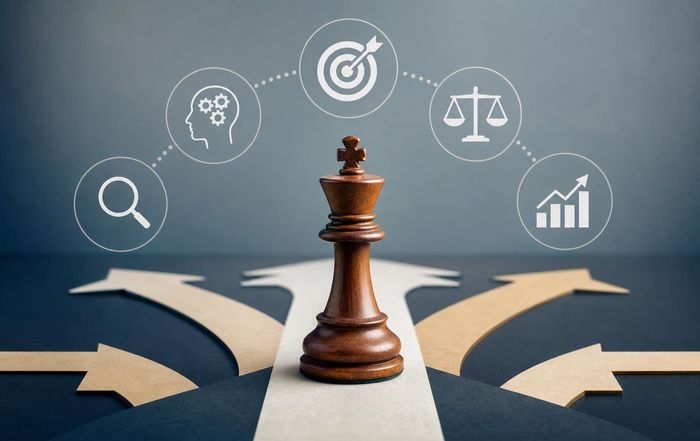
How Women Leaders Can Improve Professional Decision Making in 2026
The New Landscape of Decisions in a Complex World
In 2026, professional decision making is no longer a linear exercise in choosing between clear options; it has become a continuous leadership discipline shaped by accelerating technology, volatile markets, and heightened expectations for ethical and inclusive choices. For women leaders and emerging professionals around the world, the ability to make sound, timely, and values-aligned decisions now defines credibility as much as technical expertise, and it is increasingly the lens through which boards, teams, and clients evaluate long-term leadership potential.
On HerStage, where women's experiences, ambitions, and voices converge, decision making is not treated as an abstract management concept but as a lived daily practice that affects careers, health, relationships, and financial security. Whether a founder in Singapore weighing an AI investment, a senior executive in the United States deciding on a hybrid work policy, or a rising manager in Germany negotiating her first P&L responsibility, the same underlying challenge emerges: how to make better decisions under uncertainty while preserving personal integrity, confidence, and well-being.
In this environment, professional decision making demands a blend of analytical rigor, emotional intelligence, ethical awareness, and strategic foresight. It also requires women to recognize and leverage the specific strengths they bring to the table, including collaborative instincts, systems thinking, and a heightened sensitivity to long-term stakeholder impact. As global organizations such as McKinsey & Company and Harvard Business School continue to document the performance advantages of diverse leadership teams, the question is no longer whether women should be at the center of key decisions, but how they can refine their decision-making craft to shape the future of work and business with even greater authority.
Understanding Decision Quality: Beyond "Right" and "Wrong"
Improving professional decision making begins with reframing what "good" looks like. In fast-moving markets, leaders rarely have the luxury of perfect information, so judging a decision solely by its eventual outcome can be misleading. Instead, leading institutions such as Harvard Business Review encourage executives to evaluate decision quality based on the process used: clarity of objectives, diversity of inputs, disciplined analysis, and the ability to adapt as new information emerges. Learn more about strategic decision frameworks from Harvard Business Review.
For women navigating leadership roles in North America, Europe, Asia, and beyond, this process-focused view is particularly empowering. It shifts attention away from fear of failure, which research from organizations like the American Psychological Association shows can disproportionately constrain women's risk-taking, and toward building repeatable habits that increase the odds of success over time. When a decision is grounded in clear goals, robust data, and explicit assumptions, it becomes easier to explain, defend, and refine, even if external conditions later change.
On HerStage, this mindset aligns with a broader philosophy of continuous self-improvement and personal agency. Rather than waiting for external validation, women can cultivate their own internal standard of decision excellence, integrating insights from leadership development resources with evidence-based practices from global research institutions such as the World Economic Forum, which regularly analyzes the skills needed for the future of work across regions from South Korea to Brazil. Explore global skills trends at the World Economic Forum.
Building a Strategic Decision Framework
A structured decision framework provides a reliable foundation that leaders can adapt to different industries, cultures, and organizational sizes. While each professional will customize the details, several core elements tend to distinguish effective decision makers across sectors, from technology and healthcare to education and finance.
First, high-quality decisions start with a precise articulation of the problem. Many leaders rush to solutions before fully clarifying what they are trying to solve, which stakeholders are affected, and what constraints are truly non-negotiable. By spending more time framing the question, women leaders can avoid costly misalignment and ensure that their teams are working on the right issue rather than the most visible one. Resources on critical thinking and problem definition from institutions like MIT Sloan School of Management can deepen this skill; explore advanced perspectives on decision science from MIT Sloan.
Second, effective decision makers distinguish between reversible and irreversible choices. Influenced by thinkers such as Jeff Bezos, many organizations now categorize decisions into "one-way doors," which are hard to undo and require extensive analysis, and "two-way doors," which can be reversed and therefore justify faster experimentation. For women who may have been socialized to over-prepare before acting, this distinction can unlock greater agility and confidence, enabling them to move quickly where appropriate while reserving deeper due diligence for high-stakes commitments.
Third, rigorous decision frameworks incorporate scenario planning and risk assessment. In a world marked by geopolitical shifts, climate-related disruptions, and rapid technological change, leaders must consider not only the most likely outcome but also plausible alternatives. Guidance on scenario analysis from organizations like Deloitte helps executives in Canada, Australia, and South Africa stress-test their strategies against multiple futures and prepare contingency plans. Learn more about scenario planning and risk from Deloitte Insights.
For the HerStage audience, integrating such frameworks into daily practice supports both professional growth and personal resilience. When decisions are anchored in a clear, repeatable structure, it becomes easier to navigate complex choices in areas ranging from career advancement to entrepreneurial ventures, while maintaining a sense of control over one's trajectory.
Harnessing Data Without Losing Human Judgment
In 2026, leaders operate in an environment saturated with data, from real-time customer analytics and AI-generated forecasts to employee sentiment dashboards and global economic indicators. While this abundance can dramatically improve decision quality, it can also overwhelm, leading to analysis paralysis or overreliance on algorithms at the expense of human insight. Women leaders seeking to improve professional decision making must therefore develop both data literacy and the confidence to question models and metrics when they conflict with lived experience or ethical considerations.
Organizations such as OECD and World Bank have emphasized the importance of data-driven policy and business decisions, particularly in emerging markets across Asia, Africa, and South America, where accurate information can significantly accelerate development and social progress. At the same time, leading thinkers at institutions like Stanford University caution that datasets often encode historical biases, especially around gender and race, which can perpetuate inequality if left unexamined. Explore responsible AI and data ethics perspectives from Stanford HAI.
For women professionals, this means cultivating the ability to interrogate data sources: asking who collected the information, under what assumptions, and whose experiences might be missing. It also means learning to collaborate effectively with data scientists and technologists, translating complex findings into strategic narratives that boards and teams can act upon. Resources on analytics for leaders from INSEAD and London Business School can be particularly valuable for executives in France, Italy, Spain, and the United Kingdom who are steering multinational operations. Learn more about leadership analytics at INSEAD Knowledge.
Within the HerStage ecosystem, this balance of data and judgment extends beyond boardrooms to personal domains such as health and well-being, where women increasingly monitor metrics from wearables and digital platforms. The same principles apply: data provides powerful signals, but it must be interpreted through the lens of individual context, expert guidance, and personal values to support wise, sustainable decisions.
Navigating Cognitive Biases and Emotional Influences
Even the most rational professionals are influenced by cognitive biases and emotional states that can subtly distort judgment. Research from Nobel laureate Daniel Kahneman and behavioral economists at institutions like Princeton University has shown that biases such as confirmation bias, loss aversion, and overconfidence affect decisions in finance, hiring, negotiations, and strategic planning. Understanding these patterns is essential for any leader seeking to improve decision quality, and it is particularly relevant for women who may face additional pressures related to stereotype threat, visibility, and scrutiny.
Bias awareness does not eliminate these tendencies, but it allows leaders to design guardrails. For instance, when making high-stakes decisions, women executives can deliberately seek out disconfirming evidence, invite dissenting opinions from trusted colleagues, or run "pre-mortem" exercises in which teams imagine a future failure and work backward to identify causes. These practices, popularized by experts featured in outlets such as The Economist, help organizations in regions from Japan to Norway avoid groupthink and surface hidden risks. Explore more about behavioral economics and decision traps from The Economist.
Emotional intelligence is equally critical. The ability to recognize when stress, fatigue, or interpersonal conflict is coloring judgment can prevent impulsive reactions that damage relationships or reputations. Women leaders, who often juggle professional responsibilities with caregiving and community roles, benefit from building routines that protect their mental clarity: adequate sleep, reflective time, and boundaries around digital overload. Guidance on mindfulness and emotional regulation from platforms like Greater Good Science Center at UC Berkeley can support these practices, reinforcing the connection between inner stability and outer decisiveness. Learn practical strategies for emotional resilience from Greater Good Science Center.
On HerStage, this intersection of psychology and leadership is central to the platform's mission. Articles on mindfulness and personal growth emphasize that improved decision making is not just a cognitive skill but a holistic discipline that integrates mental, emotional, and physical well-being.
Inclusive Decision Making and the Power of Diverse Perspectives
Diverse decision-making teams consistently outperform homogenous groups, particularly when tackling complex, ambiguous challenges. Studies from organizations such as McKinsey & Company and Credit Suisse have demonstrated that companies with greater gender diversity in leadership are more likely to achieve above-average financial performance, stronger innovation, and higher employee engagement. Learn more about diversity and performance from McKinsey's research.
For women leaders, this evidence underscores both an opportunity and a responsibility. As they gain influence in boardrooms and executive committees across Switzerland, Netherlands, Denmark, and beyond, their presence is not merely symbolic; it materially improves decision quality by broadening the perspectives considered, challenging unexamined assumptions, and foregrounding long-term stakeholder impacts that may be overlooked in short-term profit calculations.
Inclusive decision making goes beyond representation, however. It requires intentional practices that ensure all voices are heard and weighted fairly. Techniques such as structured brainstorming, anonymous idea submission, and rotating meeting facilitation can reduce the impact of status hierarchies and cultural norms that sometimes silence women or minority contributors. Organizations like Catalyst and LeanIn.Org provide practical tools for building inclusive cultures where diverse perspectives inform every major decision. Explore inclusion strategies and research at Catalyst.
On HerStage, stories of women shaping decisions in fields as varied as education, public policy, and technology illustrate how inclusive processes lead to more ethical and sustainable outcomes. Whether designing equitable parental leave policies in Finland, advancing climate adaptation strategies in South Africa, or leading digital transformation in South Korea, women who champion inclusive decision making amplify both their impact and their credibility as stewards of long-term value.
Ethical and Sustainable Decision Making in a Transparent Era
In 2026, stakeholders across North America, Europe, Asia, and Africa expect leaders to integrate ethics and sustainability into every major decision. Customers, employees, regulators, and investors now scrutinize not only what organizations do but how they do it, with social media and investigative journalism making opaque practices increasingly difficult to hide. For women leaders, who are often seen as standard-bearers for integrity and social responsibility, the pressure to navigate ethical dilemmas thoughtfully is particularly intense.
Frameworks for ethical decision making, such as those promoted by UN Global Compact and OECD, encourage leaders to consider human rights, environmental impact, anti-corruption, and fair labor practices when evaluating strategic options. Learn more about sustainable business practices from the UN Global Compact. Integrating these considerations early in the decision process, rather than treating them as afterthoughts, helps organizations avoid reputational crises and build durable trust with stakeholders across regions from Thailand to New Zealand.
Sustainability has also become a core business driver. Initiatives aligned with the UN Sustainable Development Goals increasingly influence investment flows, supply chain choices, and product innovation. Leading companies in sectors ranging from fashion to food are rethinking materials, packaging, and sourcing to reduce environmental impact and appeal to conscious consumers. For women professionals interested in aligning career choices with personal values, resources on responsible investing and corporate sustainability from organizations like UNEP Finance Initiative provide valuable guidance. Explore sustainable finance trends at UNEP FI.
On HerStage, this ethical lens extends to personal consumption and lifestyle decisions. Articles on food and nutrition, fashion and beauty, and lifestyle choices highlight how individual decisions, multiplied across millions of women, can influence global supply chains, labor conditions, and environmental outcomes. Professional decision making, in this view, is inseparable from the everyday choices that shape the world women are helping to lead.
Strengthening Personal Confidence and Executive Presence
Even the most robust frameworks and ethical commitments will not translate into effective decision making if leaders lack the confidence to act decisively and communicate their choices with conviction. For many women, particularly in male-dominated sectors in Japan, China, or certain parts of South America, internalized doubts and external biases can erode self-trust, leading to hesitation or over-accommodation in high-stakes discussions.
Building decision confidence is both a psychological and practical process. On the psychological side, cultivating a growth mindset, as popularized by Dr. Carol Dweck and widely discussed in global education and leadership circles, helps women view imperfect decisions as learning opportunities rather than permanent verdicts on their worth or competence. On the practical side, preparation, rehearsal, and feedback from mentors or executive coaches can significantly enhance presence in critical meetings, negotiations, and presentations. Coaching organizations and leadership institutes, including those profiled by Forbes, offer case studies and tools that demonstrate how structured practice improves decision delivery as much as decision design. Explore leadership coaching insights from Forbes Leadership.
HerStage's focus on self-improvement and personal mastery supports this journey by normalizing ambition and providing narratives of women who have learned to trust their judgment despite setbacks or criticism. By sharing stories of leaders from Canada, Italy, Singapore, and South Africa who have navigated controversial decisions with integrity, the platform reinforces the message that confidence is not the absence of doubt but the willingness to act in alignment with well-considered principles.
Integrating Well-Being into Decision Capacity
Professional decision making is deeply affected by physical health, mental clarity, and overall well-being. Chronic stress, sleep deprivation, and burnout impair cognitive function, reduce creativity, and increase reliance on habitual responses rather than thoughtful analysis. For women who often shoulder disproportionate caregiving responsibilities in addition to demanding careers, protecting health is not a luxury; it is a prerequisite for sound judgment.
Medical research from organizations such as the World Health Organization and Mayo Clinic has highlighted the impact of stress and poor sleep on executive function, including memory, attention, and risk evaluation. Learn more about the health effects of stress and fatigue from the World Health Organization. Leaders in high-pressure environments, from financial hubs in London and New York to tech corridors in Seoul and Bangalore, increasingly recognize that sustainable performance requires deliberate investment in rest, movement, and emotional support.
HerStage's coverage of health, beauty and self-care, and holistic lifestyle design emphasizes that improved decision making is inseparable from how women treat their bodies and minds. Simple practices such as scheduling decision-heavy work for times of peak energy, taking brief breaks before major choices, and establishing rituals to decompress after intense days can significantly improve clarity and reduce impulsive reactions. Mindfulness techniques, including those taught by organizations like Mindful.org, provide accessible tools for staying present under pressure and observing thoughts without being hijacked by them. Explore mindfulness practices for professionals at Mindful.org.
Continuous Learning and the HerStage Perspective
In a world where industries are reshaped in months rather than decades, decision making must be supported by continuous learning. Women leaders who commit to ongoing education-whether through formal programs, online courses, or peer networks-expand the range of options they can envision and evaluate. Platforms such as Coursera, edX, and LinkedIn Learning offer specialized programs in strategic decision making, data analytics, behavioral economics, and leadership communication, accessible to professionals in Malaysia, Netherlands, France, and beyond. Explore global online learning opportunities at Coursera.
HerStage, as a dedicated space for women's voices and ambitions, plays a complementary role in this learning ecosystem. Its sections on business and entrepreneurship, world affairs, and career strategy contextualize technical decision frameworks within the lived realities of women navigating complex cultures, expectations, and aspirations. By blending expert analysis with personal narratives, the platform helps readers see themselves not only as decision takers responding to external demands but as decision makers actively shaping organizations, communities, and industries.
Ultimately, improving professional decision making in 2026 is less about mastering a single technique and more about cultivating an integrated identity: a woman who combines analytical rigor with empathy, data literacy with ethical clarity, ambition with well-being, and global awareness with personal authenticity. As more women around the world step into roles where their decisions influence thousands or even millions of lives, spaces like HerStage become crucial arenas for reflection, connection, and empowerment.
From boardrooms in Zurich to classrooms in Johannesburg, from design studios in Milan to policy offices in Ottawa, the decisions women make today will define the contours of business, society, and culture for decades to come. By embracing structured frameworks, challenging biases, championing inclusion, honoring ethics, and caring for their own health and confidence, they can ensure that those decisions are not only effective but also deeply aligned with the more just, sustainable, and humane world they are determined to build. For women seeking to refine this craft, HerStage stands as a trusted companion, illuminating the path toward wiser choices and more powerful leadership in every sphere of life.
